

The Quantum Dance: Shattering Our Understanding of Matter
Everything you think you know about magnetism isn't just incomplete—it's a fairy tale. While physicists cling to outdated models, a quantum revolution churns beneath our assumptions, threatening to shatter physics as we know it.
"The most dangerous phrase in science is 'We've always done it this way.'"

The Magnetic Delusion

Let me be unequivocally clear: everything you think you know about magnetism isn't just incomplete—it's a simplified fairy tale we've been telling ourselves for decades. The comfortable narrative of magnetism that fills our textbooks is not just limited; it's actively impeding scientific progress.
A History of Willful Ignorance
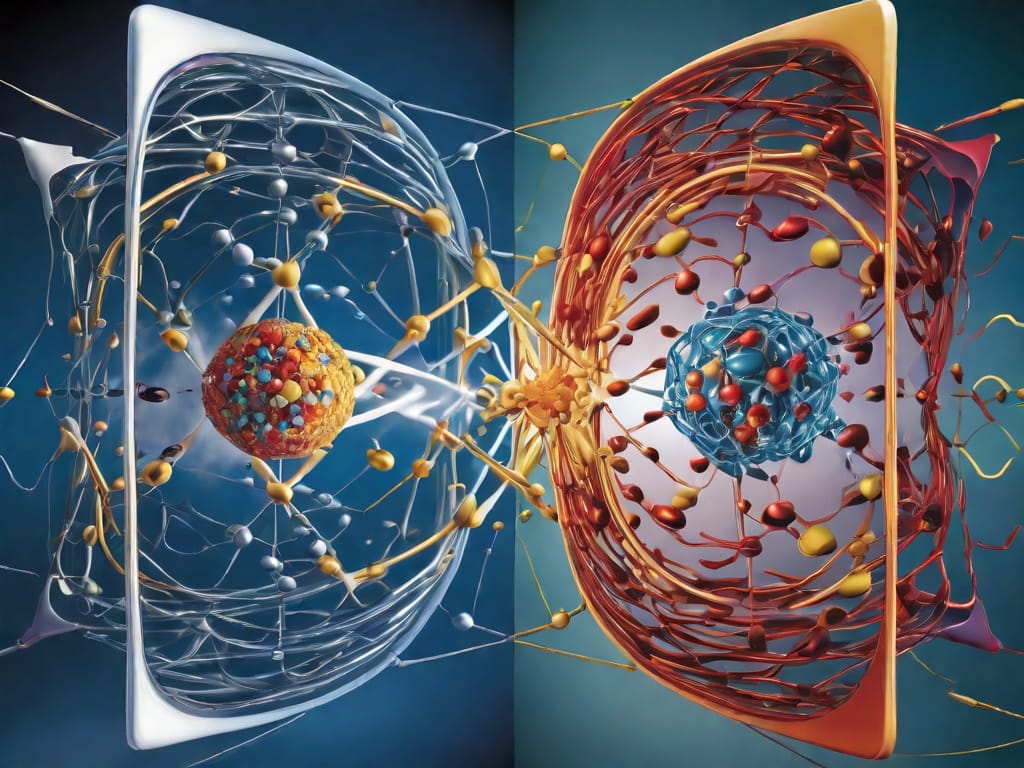
QubitThe basic unit of quantum information; a quantum computer's qubit can represent 0 and 1 simultaneously through superposition, enabling certain computations infeasible for classical hardwareIn the Lexicon →The traditional understanding of magnetism reads like a children's story: electrons, acting like tiny compass needles, align themselves in neat, orderly patterns. This oversimplified narrative has persisted not because of its accuracy, but because of its comforting simplicity. We've chosen the intellectual path of least resistance, content with models that work just well enough to avoid deeper questions.
TechnologyThe applied tools, systems, and infrastructure through which scientific knowledge is put to practical use.In the Lexicon →Let's dissect this failure of imagination:
- The Static Model Fallacy
- Conventional theory treats electrons as stationary particles with fixed properties
- This assumption ignores the fundamental nature of quantum mechanics
- We've known since Schrödinger that particles are waves, yet we cling to particle-based models
- The Exchange Interaction Myth
- Standard models reduce quantum exchange to simple pairwise interactions
- This reduction ignores the complex many-body effects that dominate real systems
- Our mathematical convenience has become our conceptual prison
- The Temperature Delusion
- Traditional models can't explain high-temperature quantum effects
- We dismiss room-temperature quantum phenomena as "noise"
- Our instruments detect what our theories tell us to look for
The consequences of this intellectual laziness are staggering. Think about those railroad barons in the 1870s. They were so caught up in their own world - laying track after track, fighting over routes, convinced they were building the future of transportation. Meanwhile, some guys in workshops were tinkering with these noisy, smoke-belching engines that would eventually make those fancy rail networks look like yesterday's news. The railroad companies couldn't see it coming because they were too busy perfecting what they already knew.
That's exactly what we're doing with magnetism right now. We're so focused on refining and tweaking our existing models that we're missing the bigger revolution happening right under our noses.
The Prison of Classical Thinking
The conventional model of magnetism—treating exchange interactions as mere quantum alignment of electron spins—is equivalent to trying to understand human society by looking at a photograph of a crowd. This oversimplified model hasn't just limited our understanding; it has actively prevented us from seeing the dynamic quantum reality beneath our classical assumptions.
The evidence for this intellectual stagnation is everywhere:
- Our persistent failure to explain high-temperature superconductivity
- The embarrassing gap between theoretical predictions and experimental results in quantum materials
- The continued reliance on crude approximations that ignore quantum dynamics
The Nagaoka Heresy: When Motion Overthrew Order
In 1966, physicist Yosuke Nagaoka committed what the scientific establishment considered intellectual treason: he dared to suggest that our entire understanding of magnetism was fundamentally flawed. His hypothesis—that magnetism emerges from electron motion rather than static alignment—wasn't just a new theory; it was a demolition charge placed at the foundation of quantum mechanics.
The magnitude of this type of paradigm shift cannot be overstated.
Picture Darwin sketching his first evolutionary tree, knowing it would shatter centuries of belief about human origins. These moments represent more than scientific discoveries – they are profound ruptures in human understanding, points where reality forces us to completely reconstruct our worldview. Picture Copernicus on that world-shattering night, his hands trembling as he checked his calculations for the hundredth time. In that moment, he wasn't just moving numbers around on paper – he was ripping humanity from its throne at the center of creation. With each verification, each refined measurement, he was dismantling not just an astronomical model, but humanity's entire conception of its place in the cosmos. This wasn't just a discovery. It was an intellectual earthquake that would crack the very foundation of human thought.
Nagaoka's insight into magnetism represents such a moment. Like a master illusionist revealing the truth behind a beloved trick, his work didn't just add to our knowledge – it fundamentally transformed what we thought we knew. We had been watching shadows on Plato's cave wall, mistaking our simplified models for reality itself.
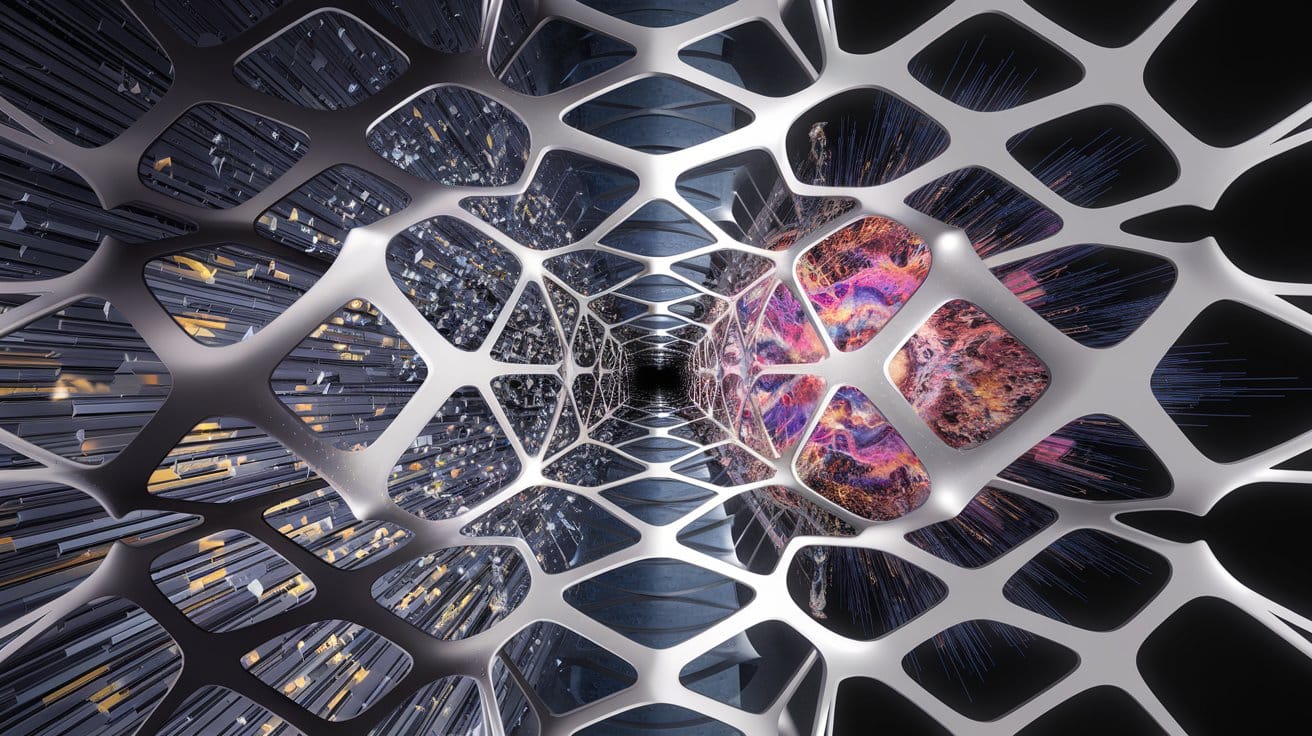
Consider what it means to realize that magnetism – this force we thought we understood well enough to build our modern world upon – emerges not from static alignment but from a perpetual quantum dance of electrons. It's as if we've spent centuries studying ocean waves by looking at photographs, only to finally grasp that their essence lies not in their shape, but in their motion.
This isn't merely adding a new chapter to physics textbooks. This is ripping out the table of contents and starting anew. When reality shatters our understanding, it doesn't just add new knowledge – it transforms the very nature of knowing itself. These paradigm shifts are intellectual supernovas, obliterating not just what we thought we knew, but how we thought we knew it.
These revelations force us to confront an exquisite and humbling paradox: that our greatest scientific achievements, our most elegant theories, may be nothing more than sophisticated shadows cast by a deeper reality we're only beginning to glimpse. Like a child who masters the rules of checkers only to discover chess, we find that what we thought was the whole game was merely the simplest version played on a fraction of the board.
This isn't just about changing what we know – it's about transforming the very apparatus of knowing itself. It's about realizing that our most cherished scientific "truths" may be like ancient maps: useful within their limited context, but hilariously inadequate for navigating the full complexity of the territories they attempt to describe.
In these moments, we don't just learn something new – we learn how much more there is to learn. And in that revelation lies both the terror and the beauty of true scientific discovery.
ConsciousnessSubjective experience of awarenessIn the Lexicon →Let's dissect exactly why most physicists still fail to grasp its full implications:
The Bankruptcy of Traditional Models:
- Static spin alignment models are fundamentally incapable of explaining dynamic quantum phenomena
- Exchange interactions, while real, have been grotesquely oversimplified
- The concept of fixed magnetic moments is a mathematical convenience that has outlived its usefulness
The Kinetic Ferromagnetic Revolution:
- Electron motion creates a dynamic quantum fabric that traditional models can't even begin to describe
- Magnetic order emerges from chaos in ways that challenge our most basic assumptions about causality
- The quantum choreography of electrons exhibits patterns that suggest deeper organizing principles we're only beginning to understand
Moiré Patterns: When Engineering Surpassed Theory
The experimental validation of Nagaoka's theory came not through careful, incremental research—as the scientific establishment would have preferred—but through a technological breakthrough that most physicists weren't even looking for: the creation of moiré lattices. This development didn't just validate a theory; it exposed the pathetic inadequacy of our entire theoretical framework.
Moiré Lattice: A quantum engineering triumph where misaligned atomic layers create superstructures that force electrons to reveal their true dynamic nature—behavior that our standard models said was impossible.
The implications are devastating to conventional quantum theory:
The Emergence of Quantum Order
- When two atomic layers are slightly misaligned, they create patterns that shouldn't exist according to traditional theory
- These patterns demonstrate long-range quantum coherence that defies our understanding of decoherence
- The electron behavior in these systems makes nonsense of our carefully constructed perturbation theories
The Collapse of Scale Separation
- Moiré patterns create quantum effects visible at macroscopic scales
- The supposed boundary between quantum and classical behavior dissolves
- Our entire framework of "quantum to classical transition" requires complete reconstruction
The Engineering Paradox
- Engineers building these structures achieved what theorists said was impossible
- The success of moiré engineering suggests our theoretical foundations are fundamentally flawed
- We've been using mathematics that describes what we expect, not what nature actually does
The most embarrassing aspect? These structures were created almost by accident. While theorists were arguing about the possibility of room-temperature quantum effects, engineers were already manipulating them. This isn't just a gap between theory and experiment—it's an indictment of our entire theoretical approach.
Consider the implications:
- If our theories missed something this fundamental, what else are we missing?
- How many other "impossible" quantum effects are we failing to see because our theories tell us not to look?
- What other revolutionary phenomena are hiding in plain sight, dismissed as "noise" or "measurement error"?


The Quantum Reality We've Been Denying
The implications of moiré lattice experiments force us to confront three fundamental phenomena that demolish our comfortable theories:
- Quantum Coherence: The Death of LocalityWhat's truly devastating is that these correlations don't just challenge our understanding—they obliterate it. We're not talking about small corrections to existing theories; we're witnessing the complete collapse of locality-based physics.
- Electrons maintain quantum correlations across distances that make theorists uncomfortable
- These correlations persist at temperatures where our models say they should be impossible
- The very concept of "local reality" may be nothing more than a convenient fiction
- Topological Protection: Nature's Middle Finger to DecoherenceThis isn't just another quantum phenomenon—it's proof that our entire approach to quantum stability has been backwards. We've been fighting decoherence when we should have been embracing it.
- Quantum states in moiré lattices exhibit stability that defies conventional wisdom
- These protected states laugh in the face of our decoherence calculations
- The very mechanisms we thought destroyed quantum effects actually preserve them
- Emergent Complexity: Reductionism's Last StandThe emergence of these complex behaviors isn't just unexpected—it's a direct challenge to the reductionist paradigm that has dominated physics for centuries. We're not just wrong about the details; we're wrong about how reality itself is structured.
- Complex quantum behaviors emerge spontaneously in moiré systems
- These behaviors can't be derived from our "fundamental" theories
- The hierarchy of physical laws we've constructed may be entirely artificial
The Quantum Revolution: Layers of Understanding

The End of Classical Engineering
Let's be brutally honest about the implications. This isn't just another incremental advance to be filed away in journals—it's a fundamental restructuring of what we thought possible in technology. The ramifications are so profound that most industries aren't even prepared to acknowledge them.

Quantum Computing: Our Current Approach is Obsolete
The implications for quantum computing are devastating to current research directions. The billions invested in traditional qubit architectures may be fundamentally misguided. Here's why:
- Current qubit designs ignore the dynamic nature of electron motion
- Stability problems in quantum computers might be solved by embracing, rather than fighting, electron dynamics
- The entire concept of discrete quantum gates may need to be abandoned in favor of continuous quantum choreography
Energy Systems: Beyond the Thermodynamic Paradigm
Our entire approach to energy systems is based on outdated thermodynamic principles that ignore quantum dynamics:
- Current battery technology is primitive compared to what kinetic ferromagnetism suggests is possible
- Energy transfer mechanisms at the quantum level indicate our grid architecture is fundamentally flawed
- The holy grail of room-temperature superconductivity might be achievable through controlled electron choreography
Medical Technology: The Quantum Biology Revolution
The medical establishment is woefully unprepared for how this will transform their field:
- Current MRI technology is like using a sundial in the age of atomic clocks
- Quantum coherence in biological systems suggests entirely new therapeutic approaches
- The interaction between consciousness and quantum effects can no longer be dismissed as speculation
Quantum Technology: Future Horizons
Quantum Technology: From Present to Future

The Deep Future
The scientific community's reluctance to confront the philosophical implications of these discoveries borders on intellectual cowardice. Let's address the questions that make researchers uncomfortable:
- The Nature of Reality: Our Comfortable Delusions
- Reductionism is dead, and with it dies centuries of materialist philosophy-Our "understanding" of quantum mechanics has been elaborate mathematical storytelling
- The classical world doesn't exist—it's a convenient hallucination of our macroscopic minds
- Technological Evolution: The End of Classical Engineering
- Current computing paradigms are the technological equivalent of steam engines
- Room temperature quantum effects aren't just possible—they're inevitable once we abandon our classical prejudices
- The concept of "quantum control" betrays our classical bias; we need quantum cooperation
- Human Advancement: Beyond Biological Constraints
- Consciousness is likely a quantum phenomenon—our neurological models are hopelessly inadequate
- Human enhancement through quantum engineering isn't science fiction—it's an inevitable next step
- The technological singularity concept drastically underestimates the impact of quantum dynamics
The Quantum Revolution: A Cyclical Journey

Critical Analysis: Confronting Our Intellectual Failures
The discoveries in kinetic ferromagnetism demand more than passive acknowledgment—they require a ruthless examination of our intellectual failures. This isn't just about identifying gaps; it's about confronting the systematic delusions that have become institutionalized in modern physics.
First, let's address the elephant in the room: our mathematical frameworks are not just incomplete—they're actively misleading. We've created elaborate mathematical structures that describe our preconceptions rather than reality. The "success" of these models comes not from their accuracy but from our careful selection of problems they can solve.
Consider the empirical evidence:
- Every major prediction of quantum behavior in complex systems has failed spectacularly
- Our models consistently underestimate the stability of quantum states
- We can't explain even basic phenomena like high-temperature superconductivity
The problem goes deeper than mere technical limitations. Our entire approach to physics has become an exercise in confirmation bias. We design experiments to validate our theories rather than challenge them. When unexpected results appear, we dismiss them as "anomalies" or "noise" rather than confronting the possibility that our fundamental assumptions are wrong.
The technological implications are equally damning. Our attempts to build quantum computers based on current theory have produced elaborate machines that barely outperform classical computers. Meanwhile, nature effortlessly maintains quantum coherence in biological systems at room temperature. This isn't just a failure of engineering—it's a failure of imagination.
Most disturbing is our response to these failures. Instead of questioning our foundational assumptions, we add increasingly complex mathematical patches to our theories. We're not solving problems; we're accumulating epicycles, much like medieval astronomers trying to save their geocentric model of the universe.
The path forward requires more than new theories—it demands a complete reconstruction of how we approach physics itself. We must:
- Abandon our obsession with reductionist explanations
- Confront the possibility that our mathematical framework is fundamentally inadequate
- Accept that our intuitions about reality at the quantum scale are probably wrong
Until we're willing to undertake this painful self-examination, we'll continue to mistake mathematical consistency for physical truth.
Beyond the Dance
The progression from refrigerator magnets to kinetic ferromagnetism isn't just a scientific journey—it's an indictment of our entire approach to physics. Reality isn't just stranger than we suppose; our suppositions themselves are part of the problem.
Let's abandon the pretense of modest scientific progress. This isn't an advance in quantum mechanics—it's the beginning of its complete reconstruction. Every physics textbook currently in use is obsolete. Every quantum computing project based on traditional architectures is pursuing a dead end. Every theory of consciousness that ignores quantum dynamics is worthless.this over
The questions we face aren't mere technical puzzles—they're challenges to our entire worldview. Our fundamental assumptions about reality aren't just incomplete; they're actively preventing us from understanding the quantum realm. The real revolution won't come from answering our current questions, but from learning to ask entirely new ones.
The future belongs to those who can abandon their classical intuitions and embrace the quantum dance in all its disturbing implications. Everyone else is just rearranging deck chairs on the Titanic of classical physics.
Courtesy of your friendly neighborhood,
🌶️ Khayyam

Knowware — The Third Pillar of Innovation
Systems of Intelligence for the 21st Centurty