

The Science of Subjective Value: Understanding the Architecture of Experience
Why do Red Bull's smaller, pricier, worse-tasting drinks dominate the market? Why do Disney's longer posted wait times boost satisfaction? Dive into the neural architecture of how humans actually construct value—and why traditional metrics get it wrong.
“The most significant breakthroughs in business will arise not from manipulating physical reality, but from mastering the art of influencing how we perceive and construct value.”

Beyond the Measurement Paradox
In Part 1, we explored what I termed the "Great Marketing Delusion" - the persistent belief that consumer behavior can be understood and optimized through purely objective metrics. Now we journey even deeper into the architecture of how humans construct value and experience.
 ✨ Token Wisdom
Consider this paradox: Why do some of the most successful business strategies systematically violate traditional market logic? The answer lies not in market dynamics, but in the neural architecture of human experience itself.
Neural Value Architecture: The sophisticated system of mental processes through which humans construct their experience of value, integrating contextual cues, expectations, and sensory inputs into coherent perceptions.
TechnologyThe applied tools, systems, and infrastructure through which scientific knowledge is put to practical use.In the Lexicon →This understanding challenges everything we think we know about business strategy. Traditional approaches focus on optimizing objective metrics - faster service, better features, and lower prices. Yet some of the most successful businesses systematically violate these "fundamental" principles:
- Red Bull succeeded by offering less liquid at higher prices
- Disney improved satisfaction by showing longer wait times
- Rolls-Royce increased sales by moving away from car shows
To understand these apparent contradictions, we must first grasp a fundamental truth: The brain doesn't passively receive value - it actively constructs it. Just as our visual system creates the experience of purple from the interaction of red and blue wavelengths, our value perception system constructs experience from the integration of multiple signals and contexts.
In the sections that follow, we'll explore:
- The Context Architecture: How environmental and social cues shape value construction
- The Signal Integration Framework: How multiple inputs combine to create unified experiences
- The Neural Architecture of Price: How price perception operates more like a neural network than a calculator
- The Measurement Fallacy: Why traditional metrics often destroy what they attempt to measure
- The Future of Experience Design: How businesses can systematically align with human psychological reality

ConsciousnessSubjective experience of awarenessIn the Lexicon →Through this exploration, we'll uncover not just new business principles, but fundamental insights about how human consciousness constructs reality itself. The implications extend far beyond marketing or pricing strategy - they touch on the very nature of human experience and decision-making.
As we embark on this journey, remember: Just as the color purple doesn't exist in physical reality but emerges from neural processing, value itself might be less about objective features and more about how our brains construct meaning from the complex interplay of signals, contexts, and expectations.
The businesses that thrive in the coming decades will be those that master not just the mechanics of service delivery, but the architecture of human experience itself. Let's begin by understanding how context shapes - or rather, constructs - our perception of value.
The Context Architecture: Engineering Perceptual Reality
In the dimly lit dining room of a high-end restaurant, a ritual unfolds that represents one of the most sophisticated exercises in psychological architecture ever devised. A leather-bound tome - never called a "drinks list" - is ceremonially presented to the perceived host of the party. This moment, far from mere tradition, exemplifies what I term contextual value engineering at its finest.
Contextual Value Engineering: The systematic design of environmental and social cues that shape how the brain constructs experiential value through the orchestration of multiple perceptual and social signals.
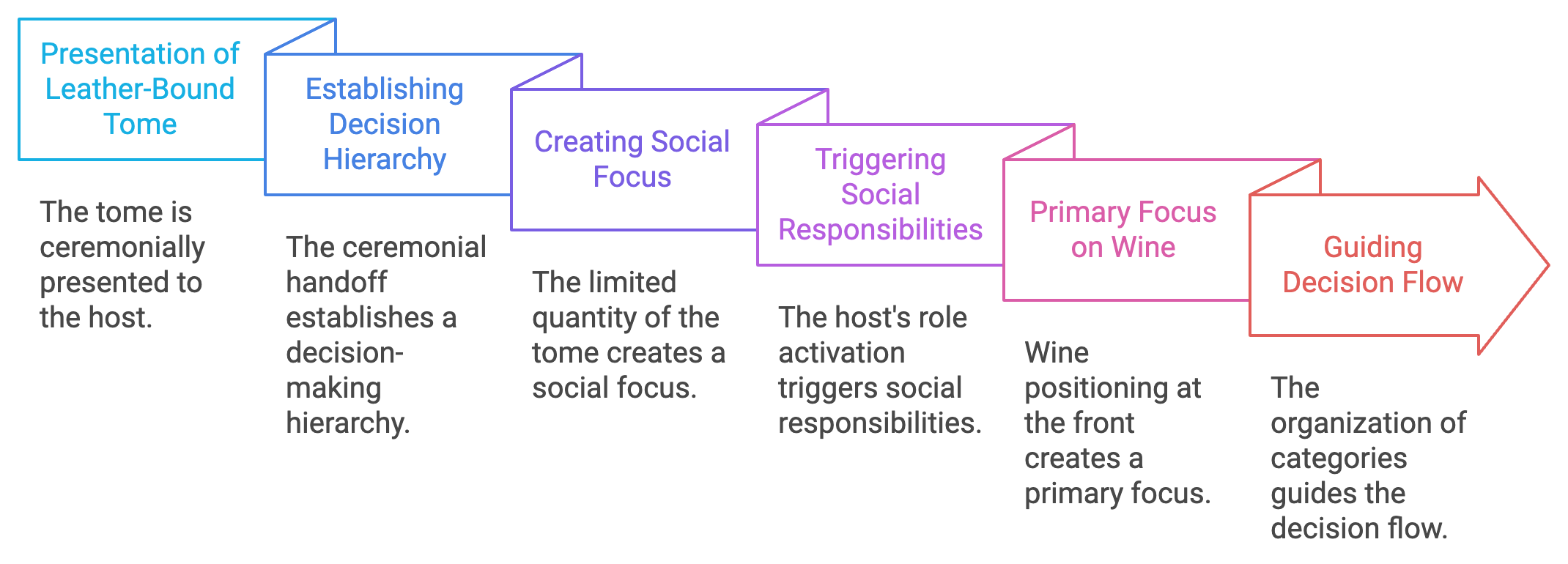
The genius of this system lies in its multi-layered psychological architecture:
- Physical Staging: Leather binding signals a premium experience, the weight and size create tactile value cues, and the limited quantity (one list) creates social focus.
- Social Choreography: Ceremonial handoff establishes decision hierarchy, group attention creates implicit pressure, and host role activation triggers social responsibilities
- Choice Architecture: Wine positioning at the front creates primary focus, category organization guides decision flow, and the inevitable "red or white?" question funnels group choice.
But here's what's truly fascinating - this seemingly simple ritual reveals a fundamental principle of human psychology that most businesses catastrophically misunderstand: Context doesn't merely influence value perception - it constructs it from the ground up.
The Rolls-Royce Revelation
The Contextual Transformation Principle, perfectly illustrates Rolls-Royce's revolutionary discovery process. When they stopped displaying their vehicles at automotive shows and moved to aircraft exhibitions, they weren't just changing venues - they were exploiting what I term the relative value gradient:
Relative Value Gradient: The phenomenon where value perception shifts dramatically based on environmental reference points, independent of objective features or attributes.
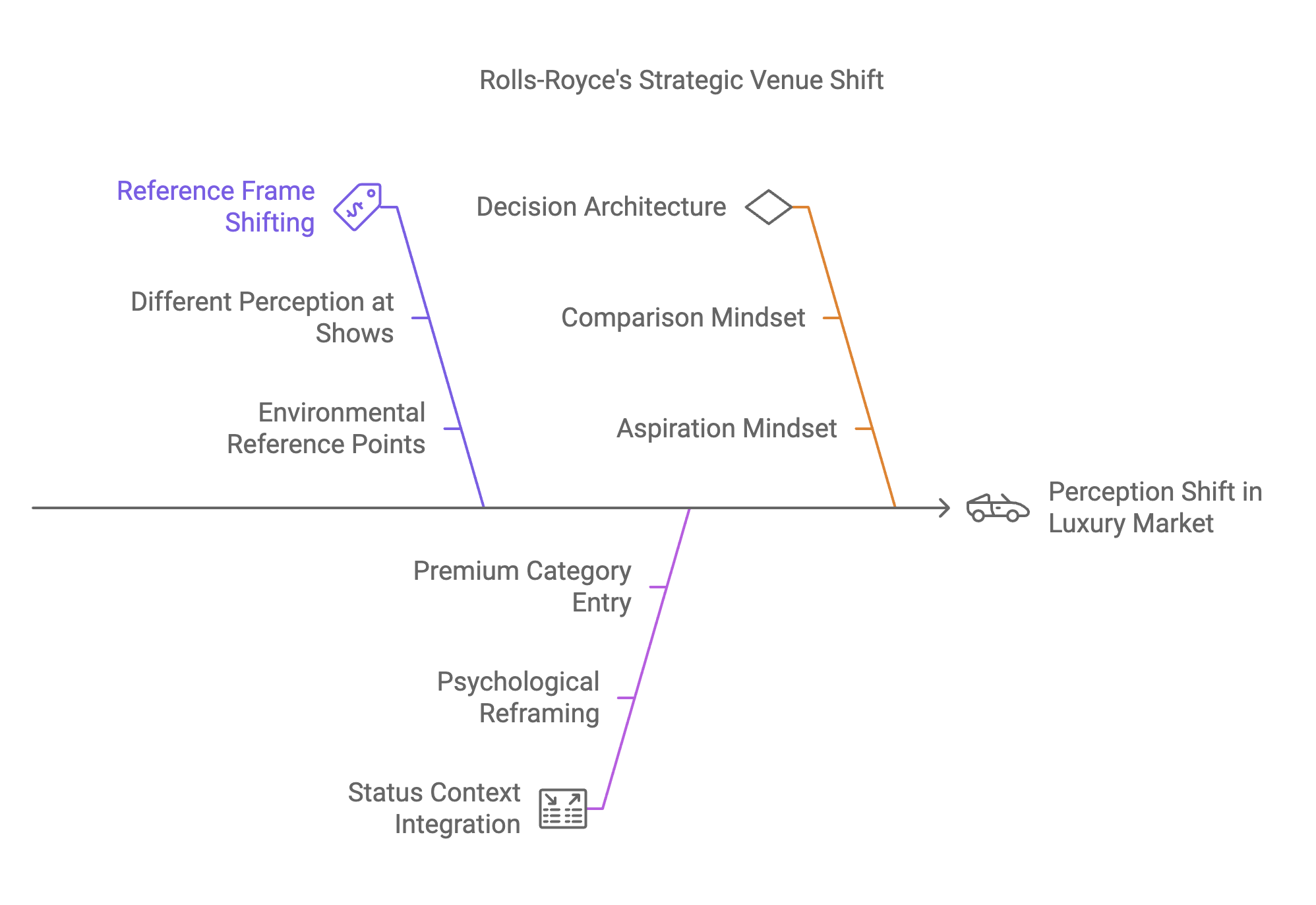
This principle operates through three key mechanisms:
Reference Frame Shifting
- At car shows: £300,000 = extreme luxury
- At aircraft shows: £300,000 = reasonable indulgence
- Same price, radically different perception
Status Context Integration
- Automotive context: Top of normal category
- Aviation context: Entry to premium category
- Psychological reframing of an entire value proposition
Decision Architecture
- Car shows trigger comparison mindset
- Aircraft shows activate aspiration mindset
- Transformation of decision framework
The Philips Paradox
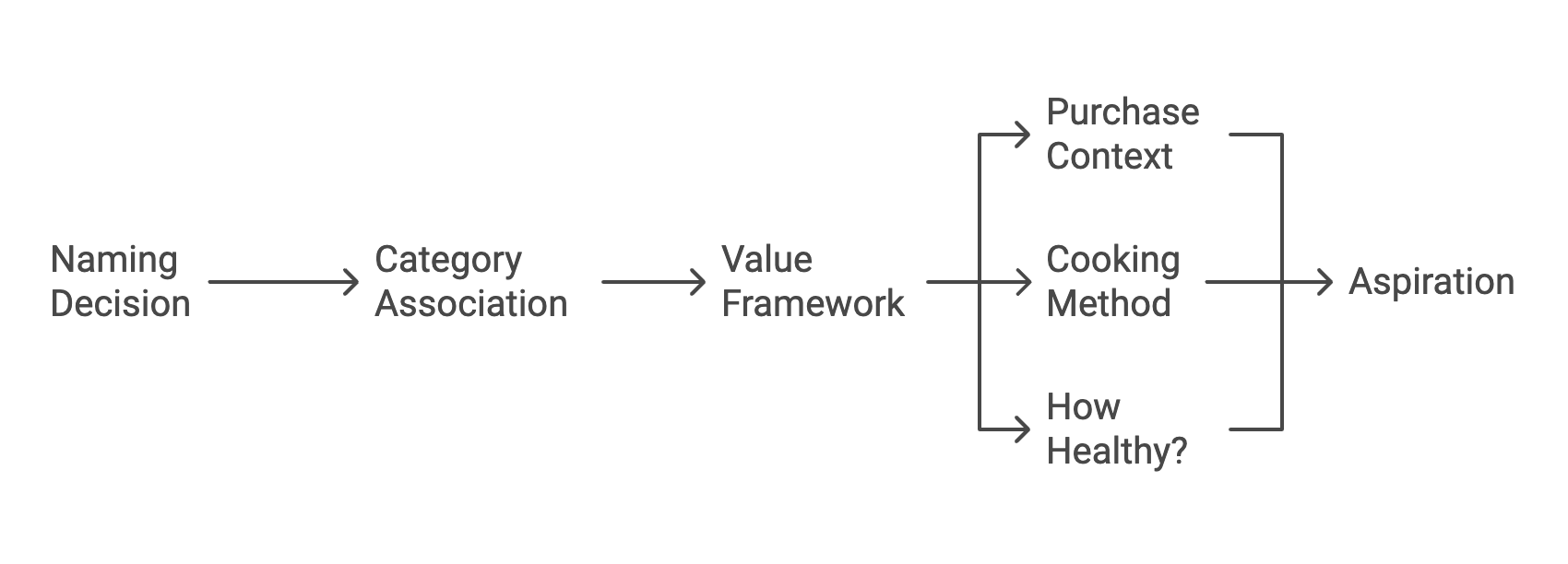
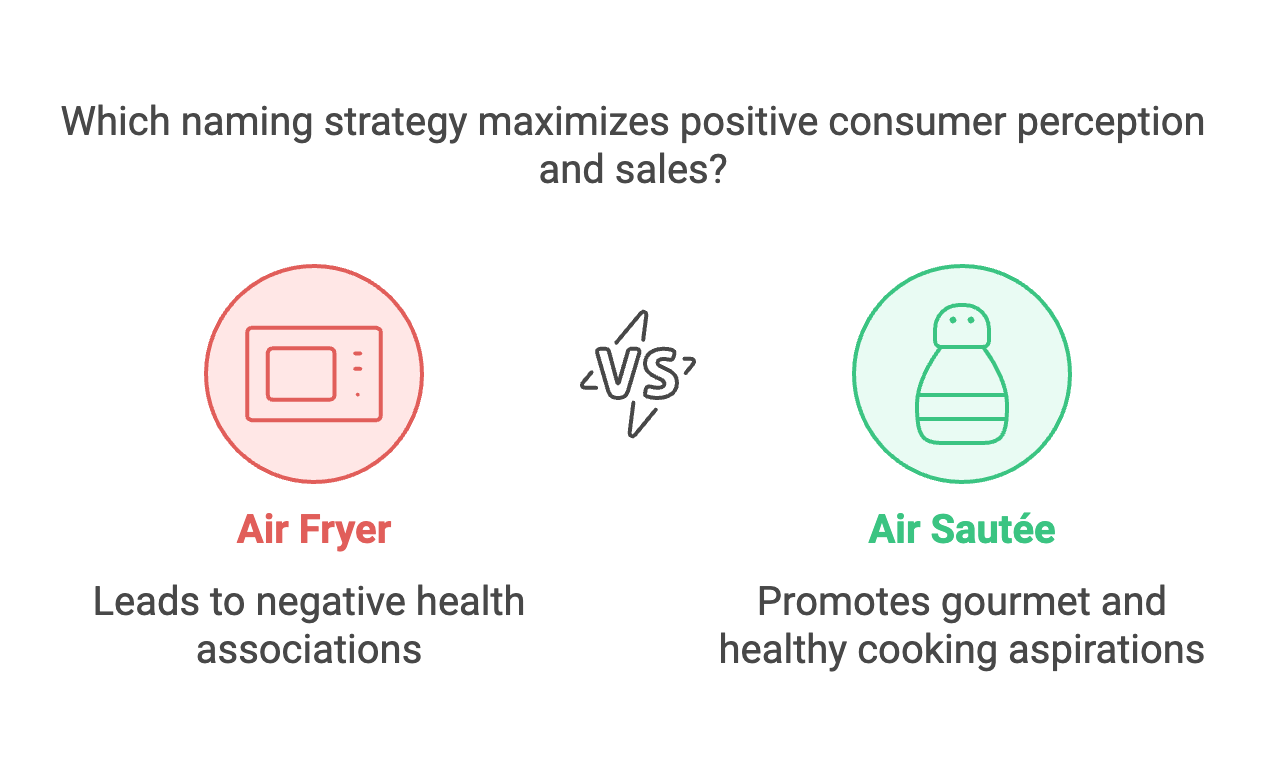
This understanding helps explain the Philips Paradox - why their revolutionary air fryer initially struggled despite superior technology. By naming it an "air fryer," they created what I term a negative context cascade:

The alternative pathway reveals the missed opportunity:
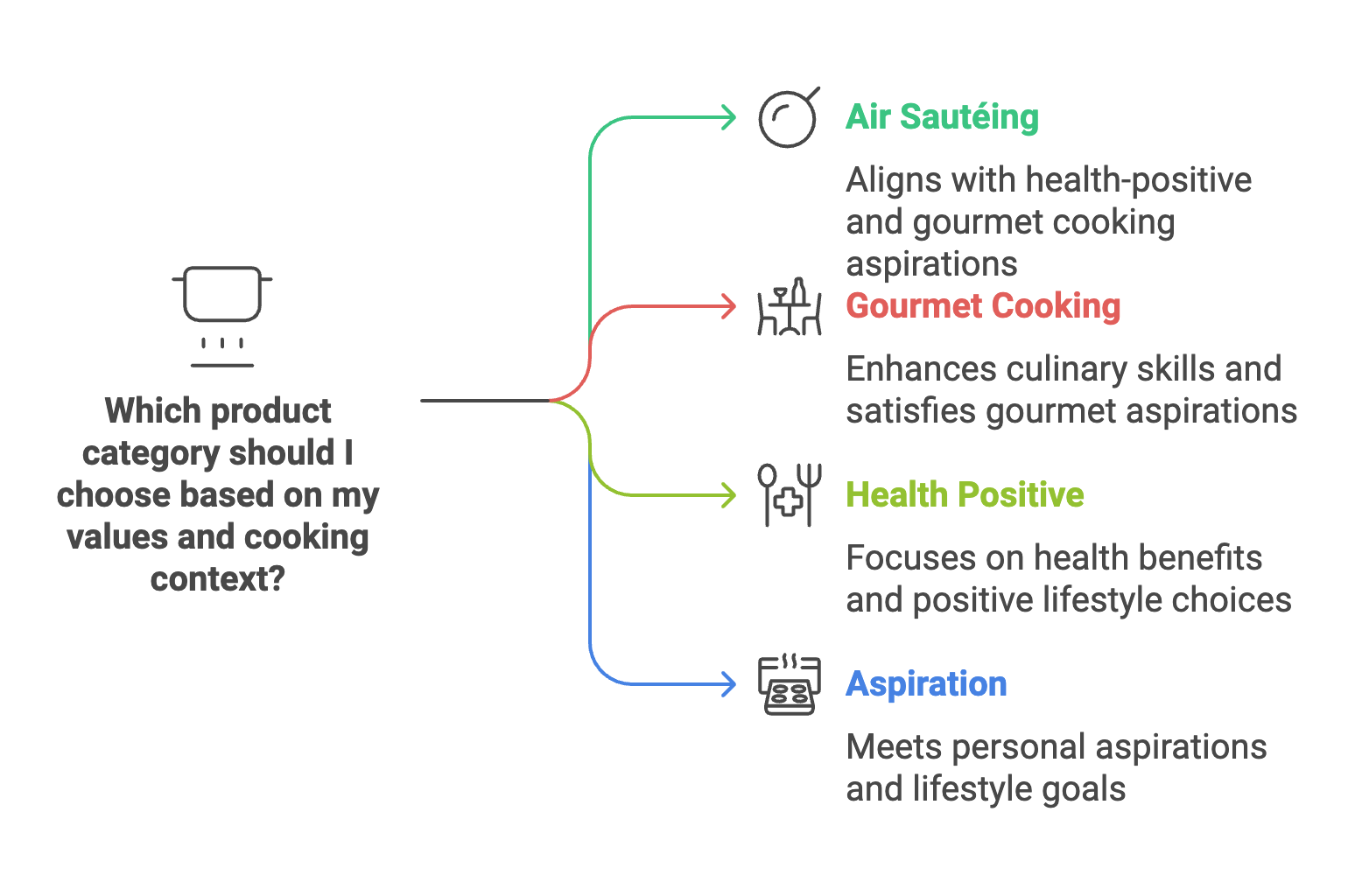
This wasn't just a marketing mistake - it was a fundamental misunderstanding of how context constructs value in the human brain.
The Implementation Framework
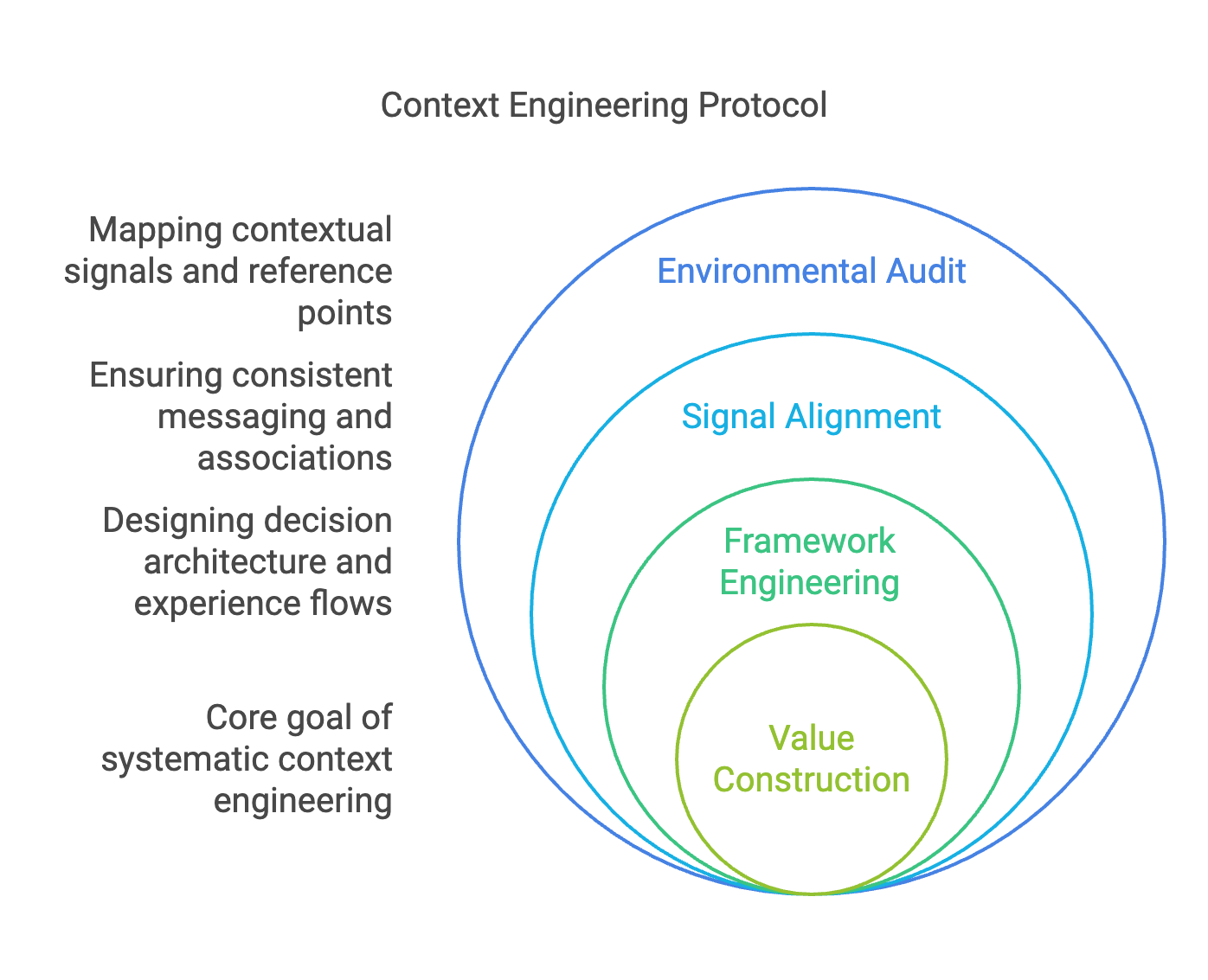
For businesses seeking to apply these insights, consider using the term, Context Engineering Protocol:
- Environmental Audit: Map current contextual signals, identify reference points, and analyze decision frameworks
- Signal Alignment: Ensure consistent messaging, remove contradictory cues, and strengthen desired associations
- Framework Engineering: Design decision architecture, create value-supporting contexts, build coherent experience flows
The most successful businesses don't just understand these principles - they systematically engineer contexts that support value construction at every level of customer interaction.
As we move to our next section on Signal Integration, remember: Just as a Rolls-Royce appears different at an aircraft show than a car dealership, all value perception depends on the sophisticated architecture of context. The question isn't whether context matters, but how systematically we engineer it.
The Signal Integration Framework: Orchestrating the Symphony of Experience
When you walk into an Apple Store, your brain processes thousands of subtle signals - the precise angle of the display tables, the carefully calibrated lighting, the choreographed staff interactions. Yet somehow, these disparate elements coalesce into a singular, coherent experience. This phenomenon exemplifies the Integrated Signal Matrix: a sophisticated system where multiple stimuli combine to construct a unified perception of value.
Signal Integration Theory: The systematic process through which the brain combines multiple contextual, social, and physical signals to construct a unified experience of value, operating through both conscious and unconscious pathways.
The Architecture of Signal Integration
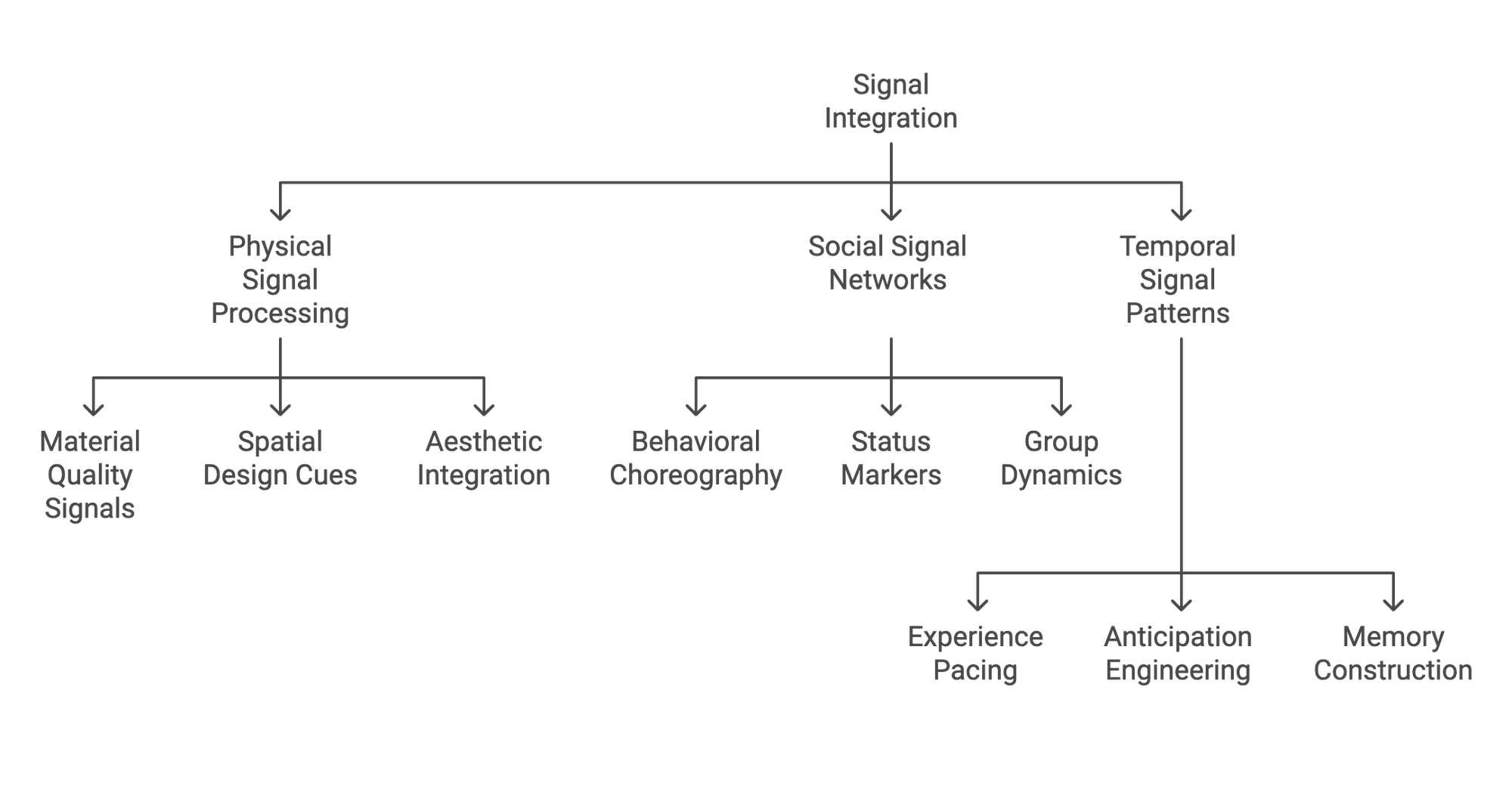
Think of your brain as an orchestra conductor, simultaneously processing and integrating multiple signal streams:
Physical Signal Processing
- Material Quality Signals: Texture, weight, finish
- Spatial Design Cues: Layout, lighting, acoustics
- Aesthetic Integration: Color harmony, visual flow
Social Signal Networks
- Behavioral Choreography: Staff interactions, customer flow
- Status Markers: Service rituals, exclusivity cues
- Group Dynamics: Social proof, collective behavior
Temporal Signal Patterns
- Experience Pacing: Service timing, interaction rhythm
- Anticipation Engineering: Wait management, expectation setting
- Memory Construction: Peak-end rule optimization
The Five Guys Phenomenon
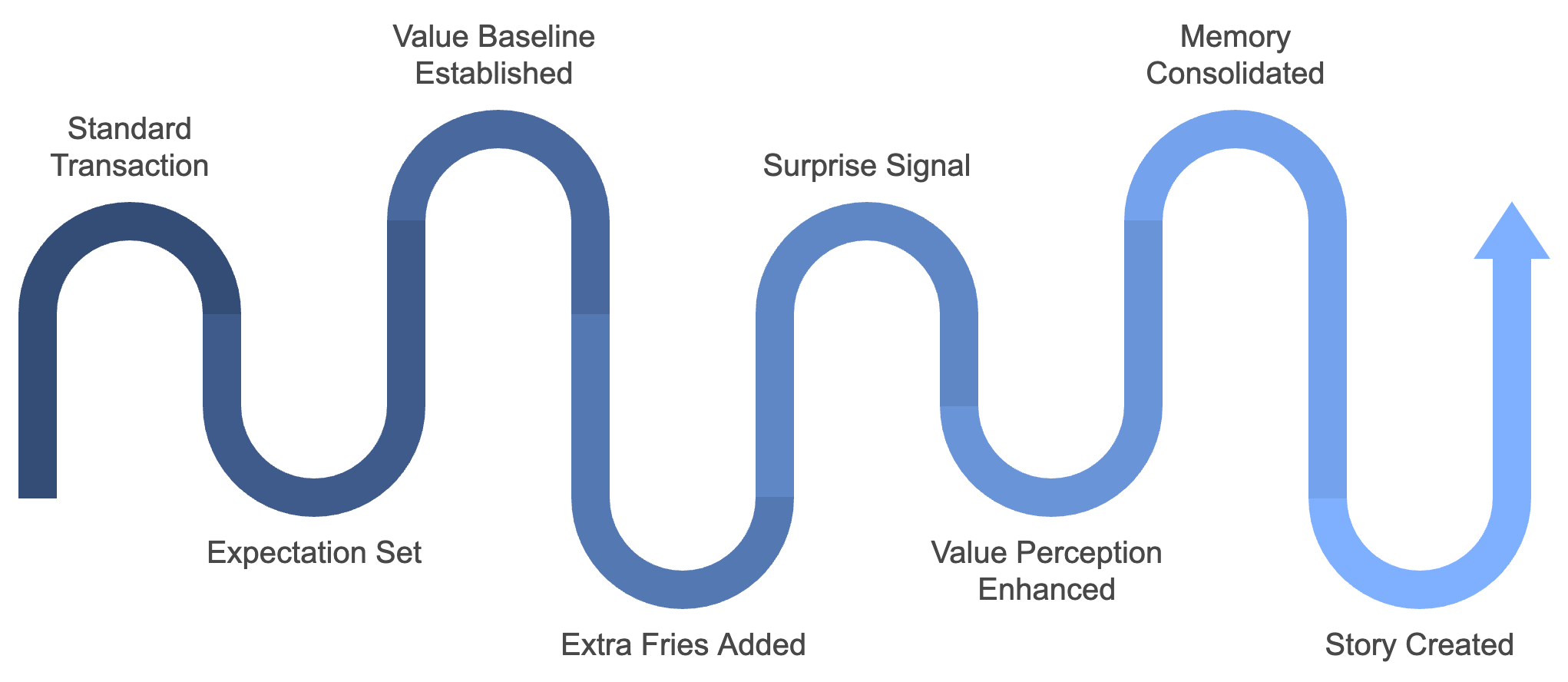
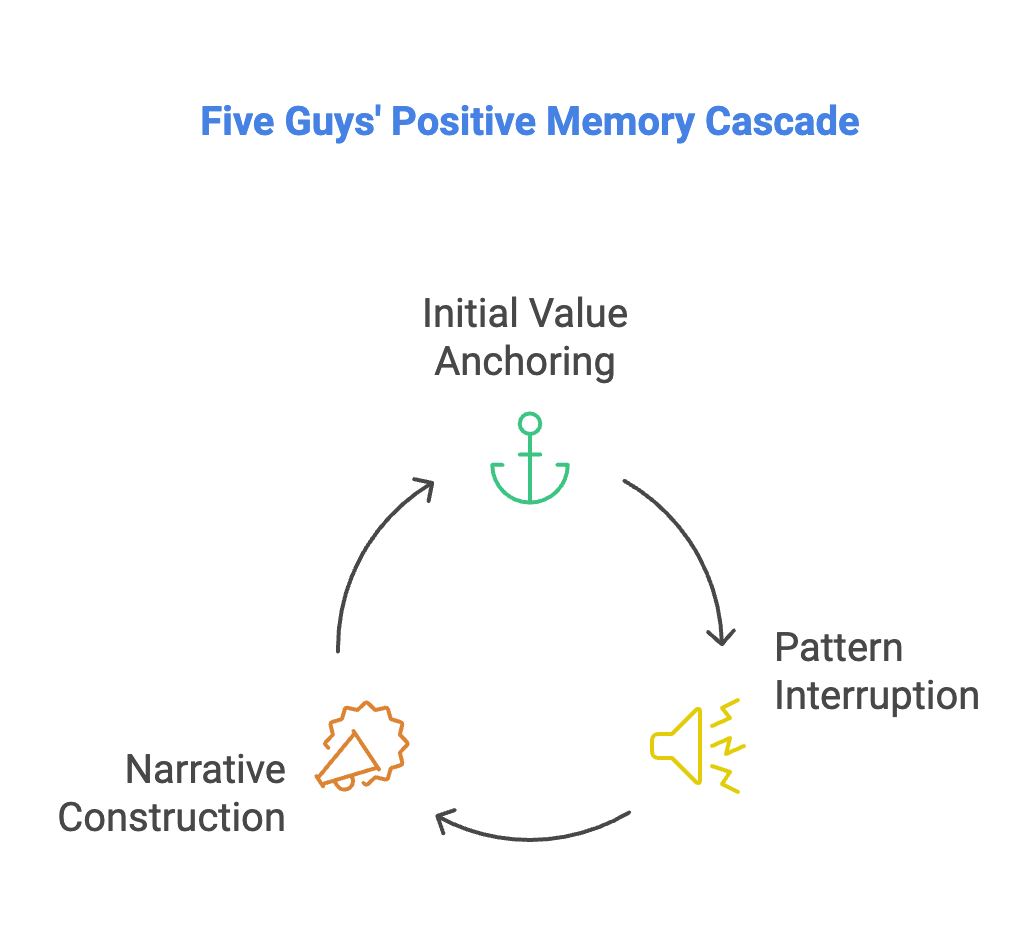
Consider the "Posterior Value Enhancement Effect", perfectly illustrated by Five Guys' famous "extra scoop" of fries. This isn't merely generosity - it's a sophisticated exploitation of how the brain constructs value memories:
This creates a positive memory cascade, that is to say:
- Initial Value Anchoring: Customer sets mental price-value relationship, transaction completed with expectations met, and psychological closure achieved.
- Pattern Interruption: Extra fries disrupt expectation, surprise triggers positive affect, and memory encoding enhanced.
- Narrative Construction: Experience becomes story-worthy, social sharing likelihood increases, brand narrative strengthened.
The Mathematical Architecture of Value
Traditional business thinking models value creation through simple addition:
Traditional Value Model:Value = Quality + Marketing + ServiceBut our understanding of neural processing suggests a far more sophisticated integration:
Neural Value Integration:Value = ∫(Context × Signals × Expectations) dt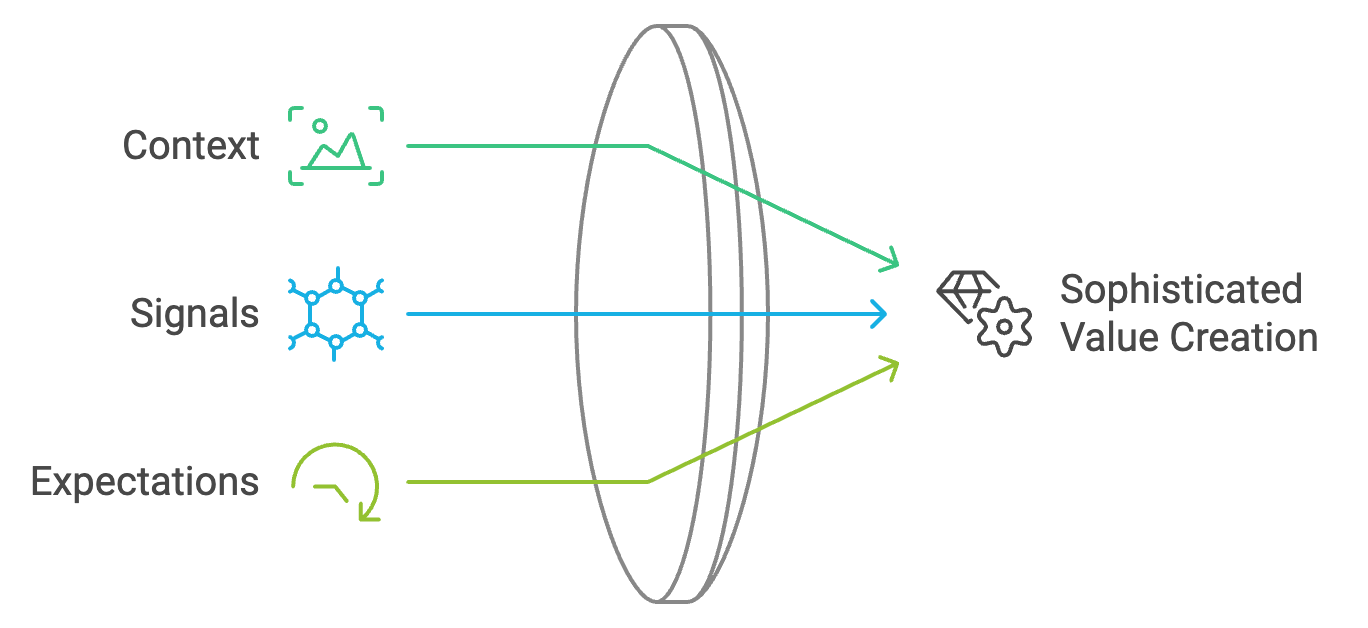
This mathematical representation captures three crucial insights:
- Multiplicative Effects: Signals multiply rather than add, weak signals can negate strong ones, and coherence matters more than strength.
- Temporal Integration: Experiences unfold over time, memory construction is dynamic, and peak-end effects dominate.
- Context Dependency: Value emerges from relationships, reference points shape perception, environmental factors multiply impact.
Practical Implementation Framework
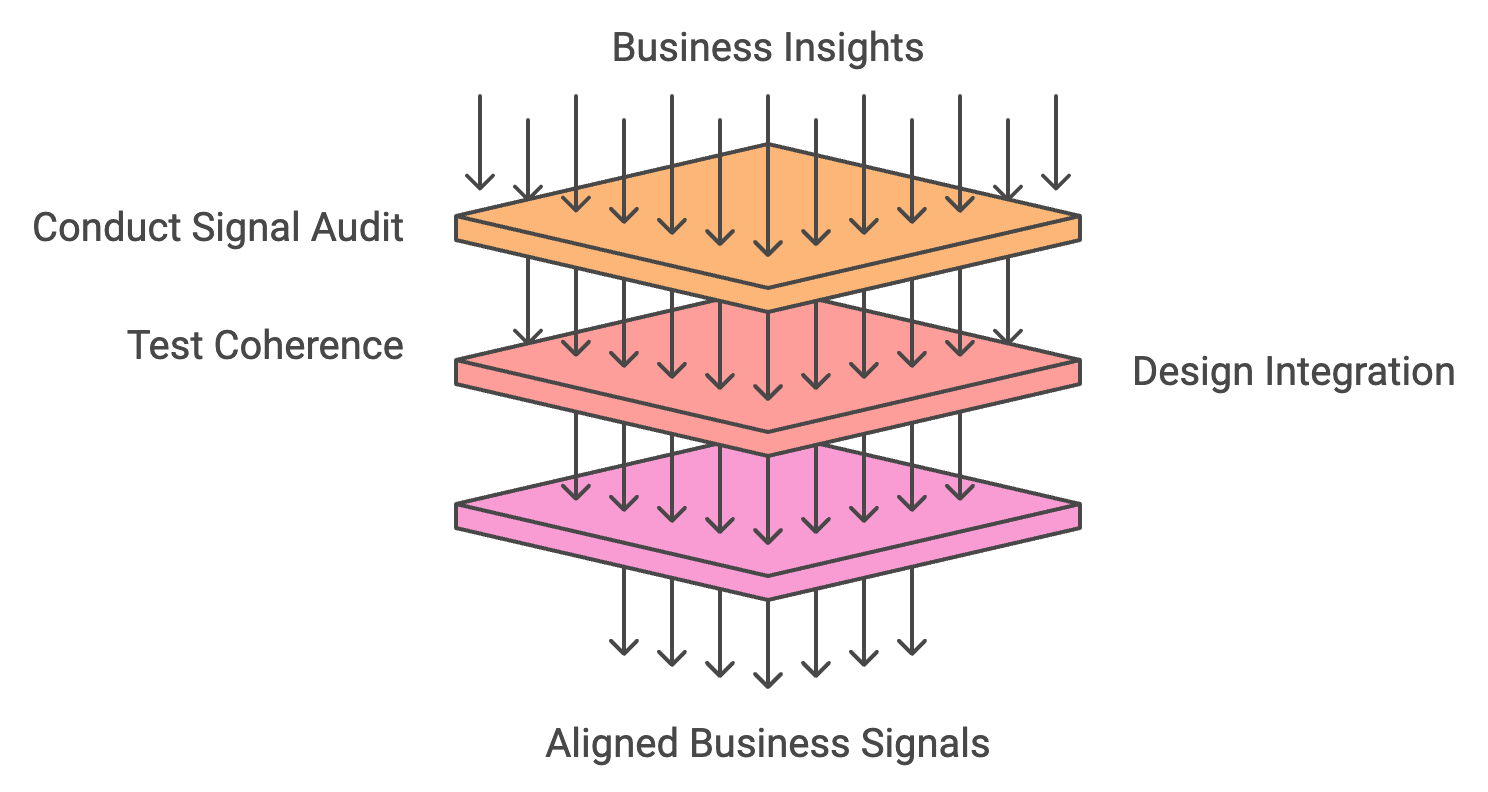
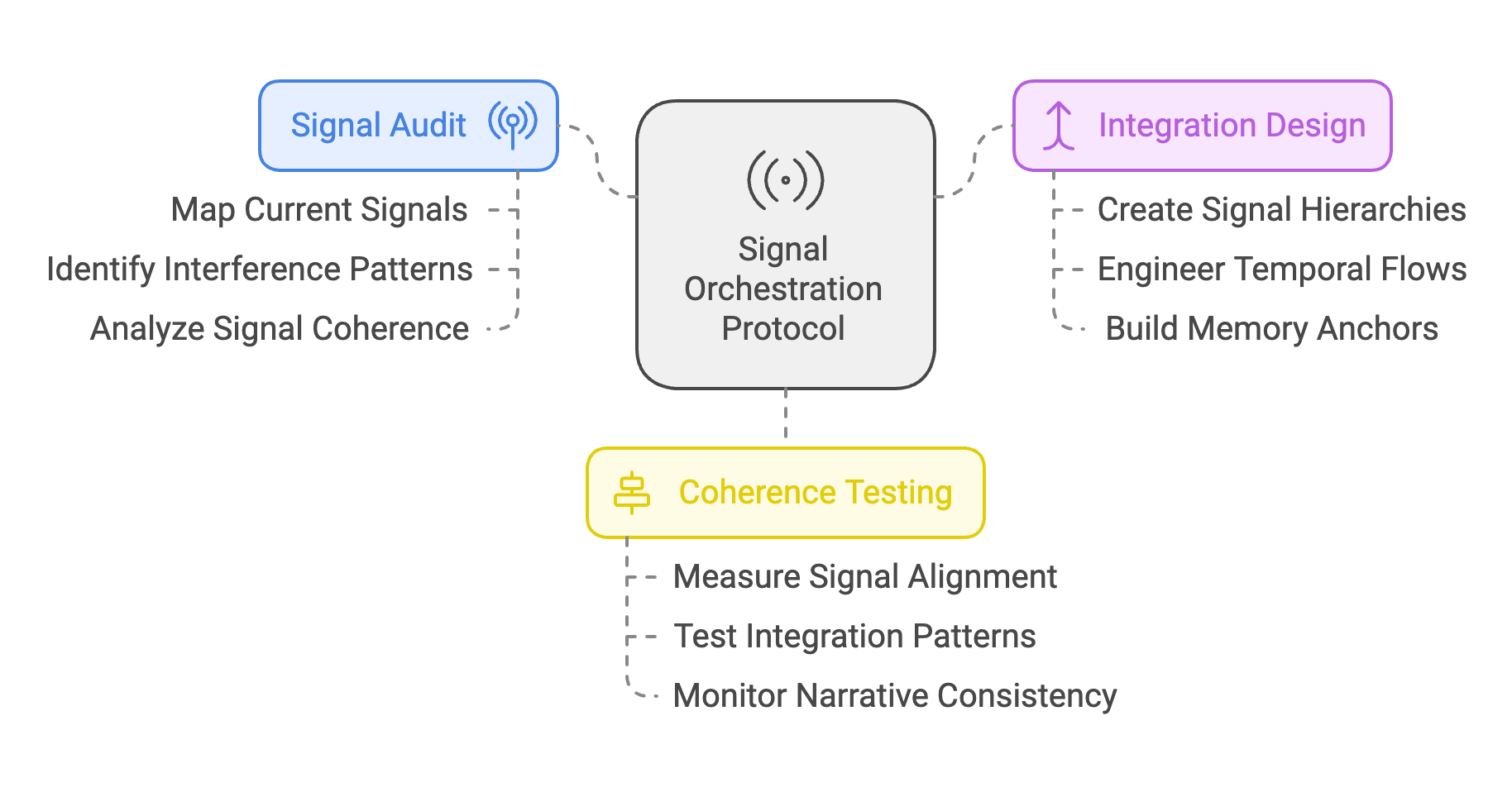
For businesses seeking to implement these insights, let's call this the the Signal Orchestration Protocol:
- Signal Audit: Map current signal landscape, identify interference patterns, and analyze signal coherence
- Integration Design: Create signal hierarchies, engineer temporal flows, and build memory anchors.
- Coherence Testing: Measure signal alignment, test integration patterns, and monitor narrative consistency
The Apple Example
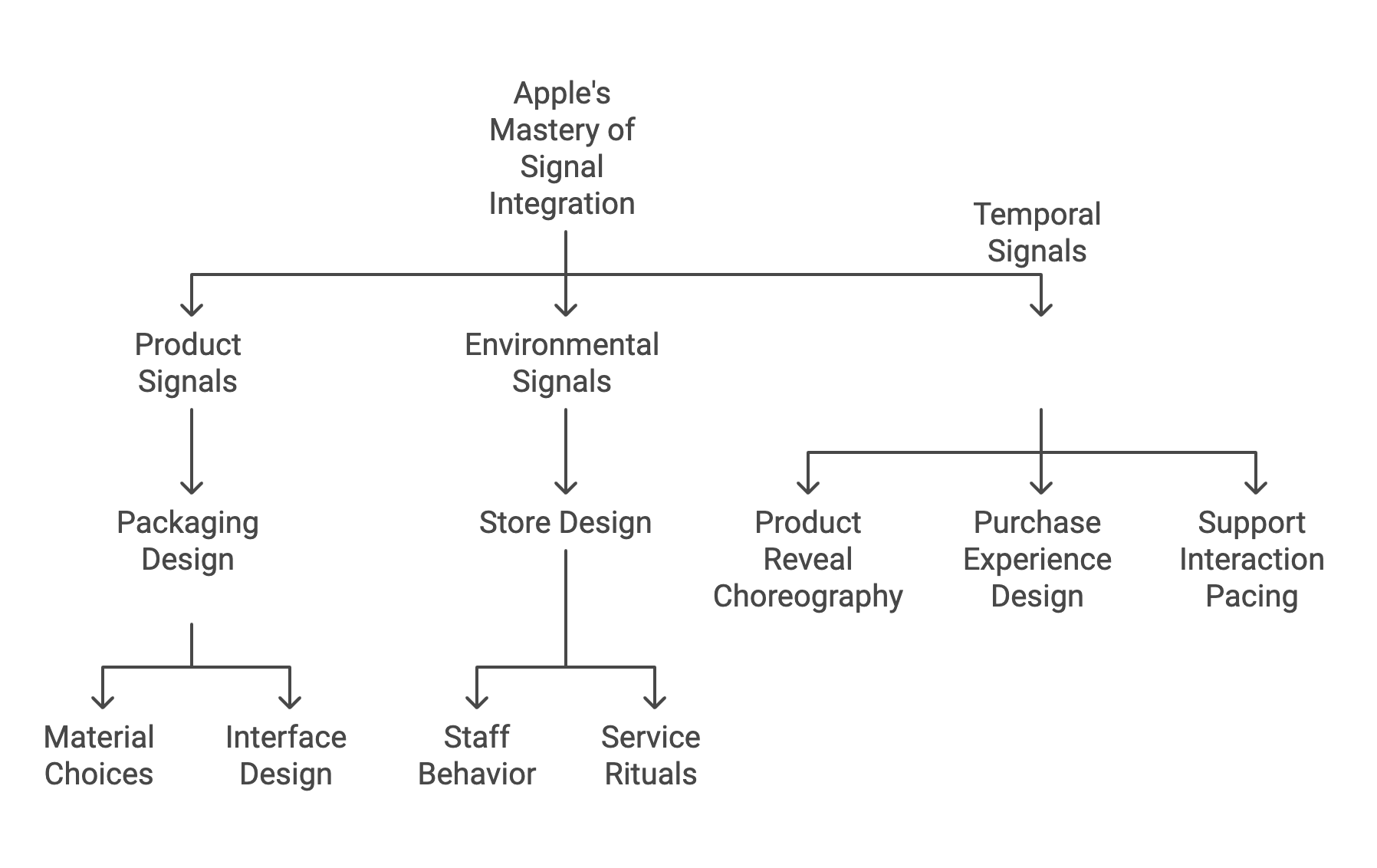
Apple's mastery of signal integration provides a perfect case study:
- Product Signals: Packaging design mirrors product aesthetics, material choices reinforce premium positioning, and interface design echoes physical form.
- Environmental Signals: Store design extends product language, staff behavior aligns with brand values, and service rituals reinforce exclusivity.
- Temporal Signals: Product reveal choreography, purchase experience design and, support interaction pacing.
Beyond Individual Signals
The key insight isn't just that multiple signals matter - it's that their integration creates something fundamentally different from their sum. Just as an orchestra creates music that transcends individual instruments, proper signal integration creates experiences that transcend individual touchpoints.
As we move to our next section on the Neural Architecture of Price, remember: The most powerful experiences don't come from optimizing individual signals, but from orchestrating their integration into a coherent whole. The question isn't which signals to send, but how to conduct their symphony.
The Neural Architecture of Price: Beyond the Rational Calculator
Picture yourself standing in a convenience store, holding two energy drinks. One costs twice as much as the other, comes in a smaller can, and intentionally tastes medicinal. Traditional economic theory would predict immediate market rejection. Yet Red Bull built a global empire using exactly this approach. This paradox reveals something profound about how our brains construct price perception.
Neural Price Construction: The sophisticated process through which the brain integrates multiple signals - including price, context, and expectations - to construct not just value perception, but the actual experience of a product or service.
The Architecture of Price Perception
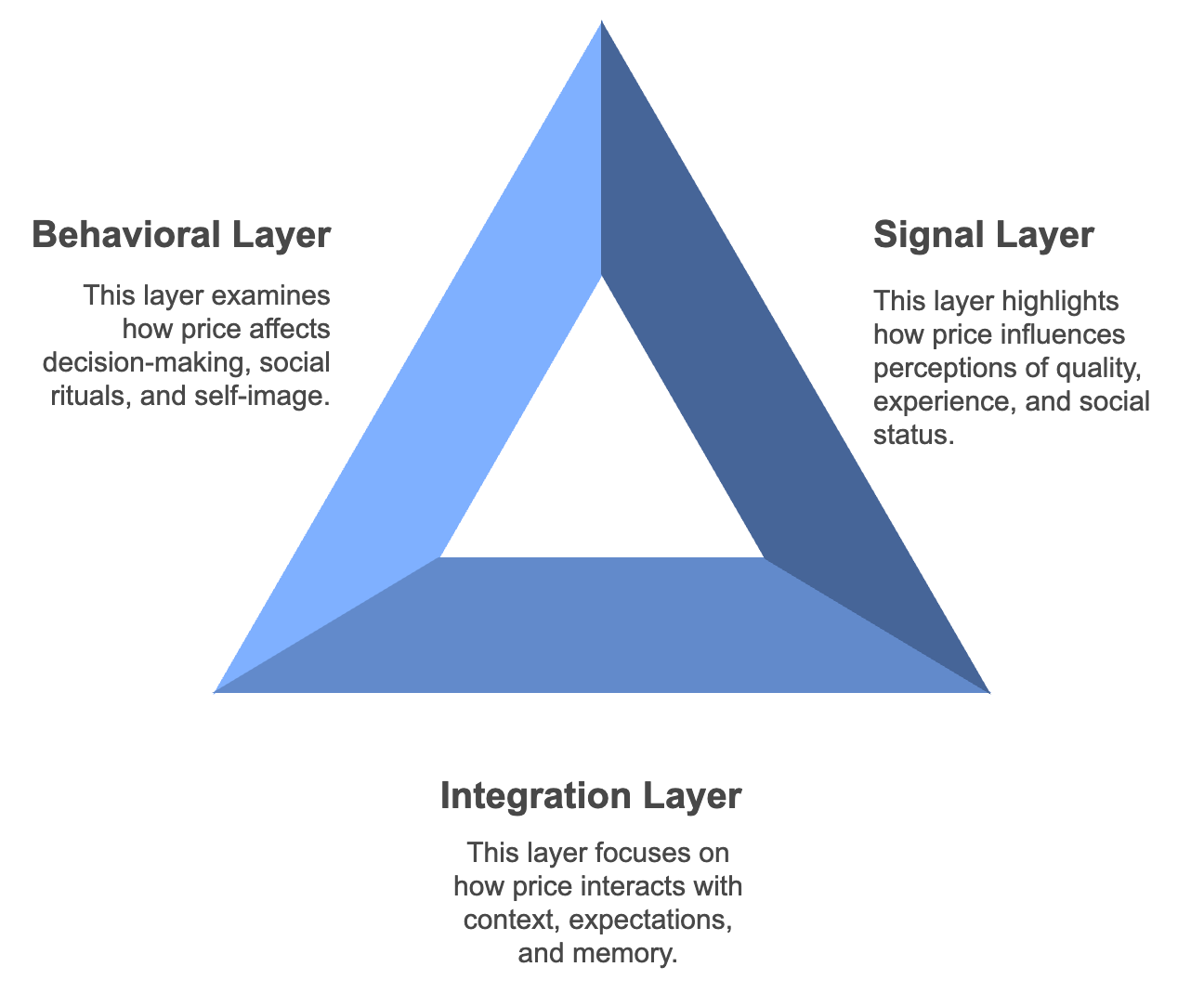
Price operates in human consciousness not as a simple cost-benefit calculation, but through what I term the Experiential Price Matrix:
Signal Layer
- Price as Quality Marker: Higher prices reshape quality perception
- Price as Experience Constructor: Cost influences actual taste/efficacy
- Price as Social Signal: Purchase price as status communication
Integration Layer
- Contextual Binding: Price meaning varies by environment
- Expectation Engineering: Price shapes pre-experience predictions
- Memory Construction: Price influences experience recall
Behavioral Layer
- Decision Frameworks: Price positions choice architecture
- Social Scripts: Price determines purchase rituals
- Identity Alignment: Price signals self-image consistency
The Red Bull Paradigm
This is a perfect case for a Coherence Cascade that Red Bull masterfully orchestrates.
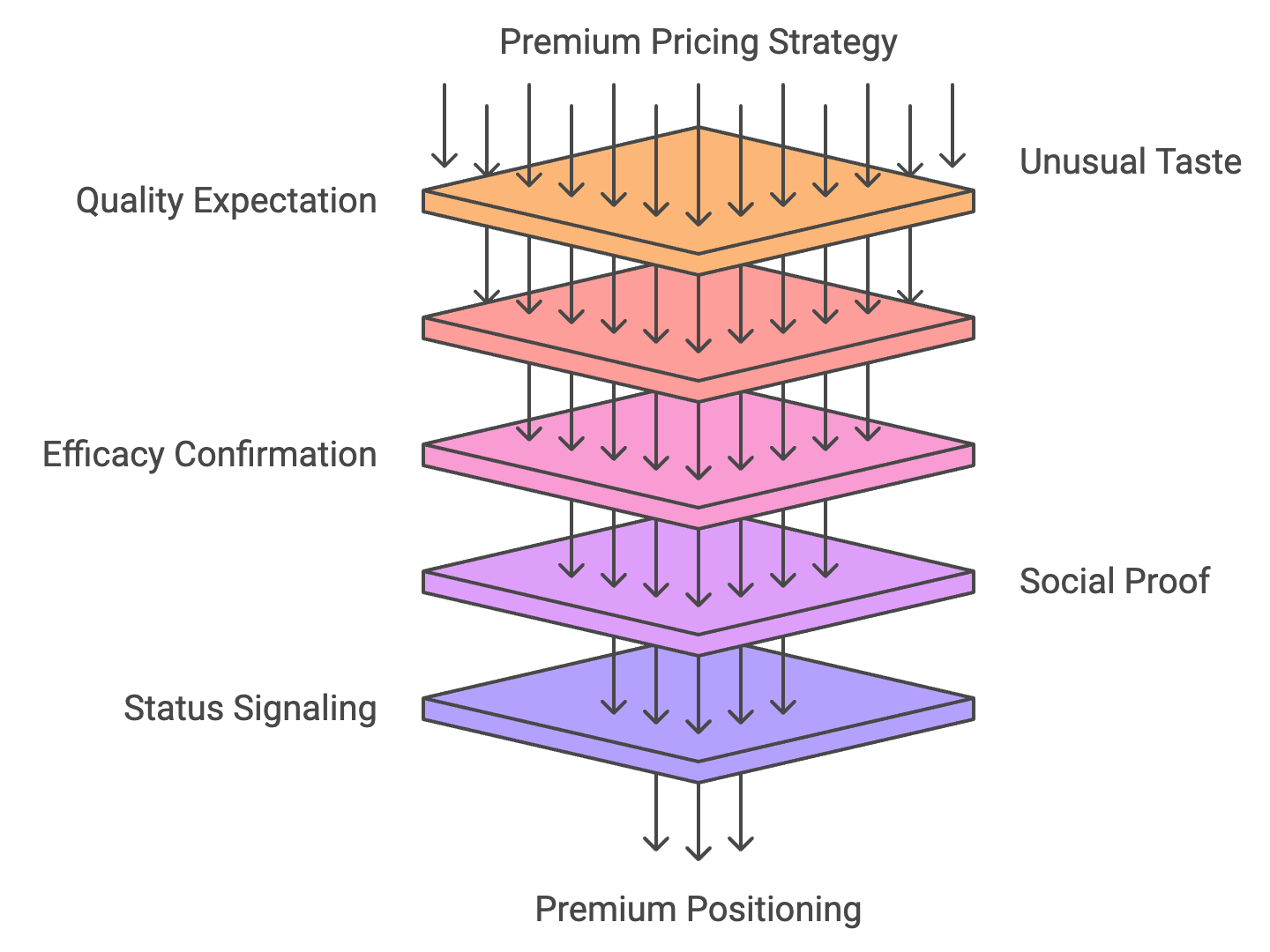
This creates a self-reinforcing system where seemingly negative product attributes become powerful positive signals:
- Price Premium: Signals uniqueness, creates performance expectations, and establishes category separation
- Size Reduction: Implies concentration, suggests potency, and enables premium positioning
- Taste Engineering: Medicinal flavor confirms efficacy expectations, distinctiveness prevents direct comparison, creates unique sensory signature
The Veblen Effect Decoded
Traditional economics struggles to explain why some products sell more as their price increases. The Veblen effect refers to an economic phenomenon where an increase in a product’s price leads to a rise in demand, which contradicts the conventional law of demand, where typically, demand drops as the price goes up. This "irrational" behavior becomes perfectly logical when we understand what determines the effect: Status-Price Integration Mechanism.
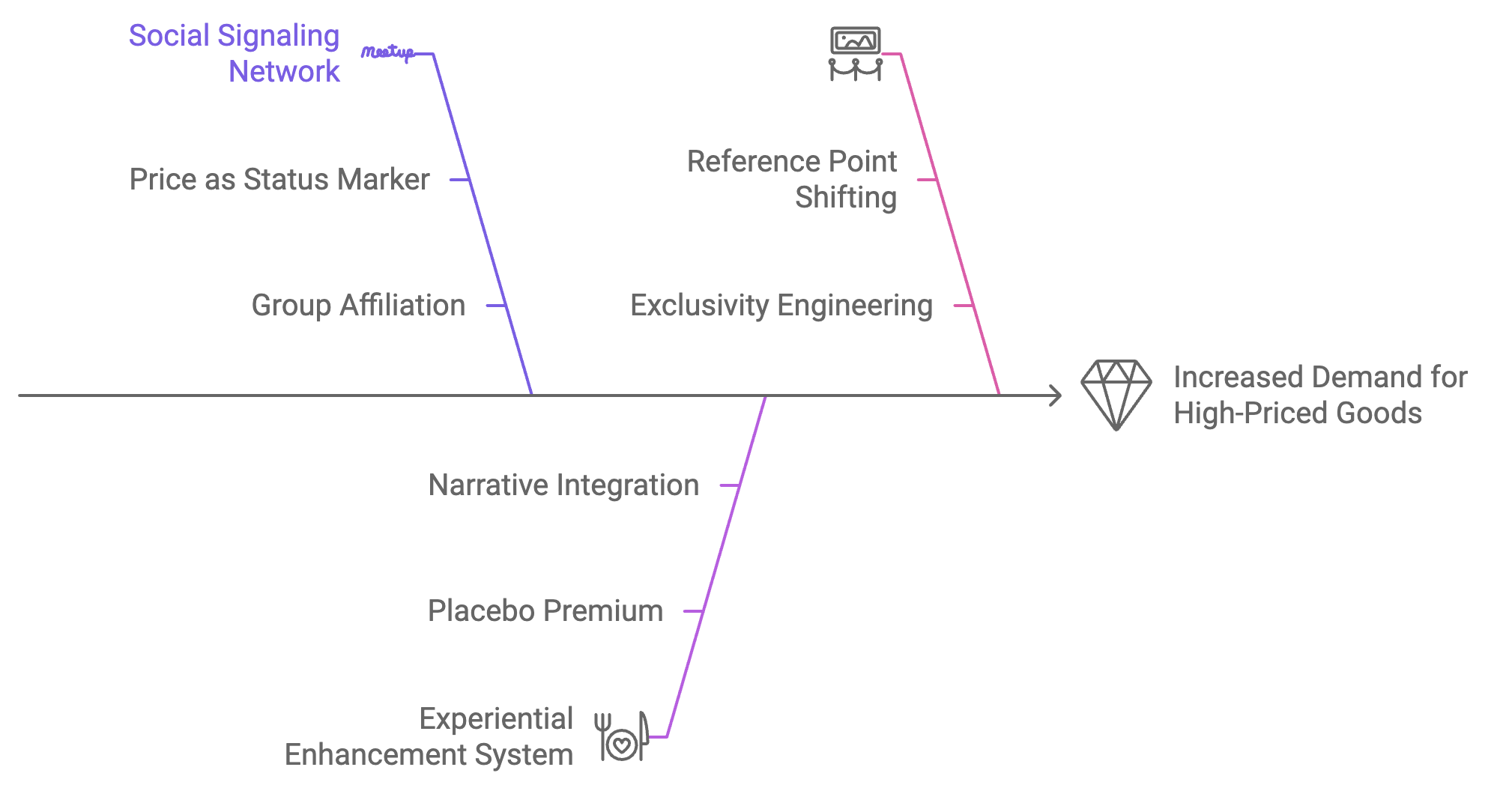
This mechanism operates through three sophisticated neural pathways:
Social Signaling Network
- Price as Status Marker: Higher prices activate social positioning circuits
- Identity Confirmation: Purchase aligns with desired self-image
- Group Affiliation: Price points create social categorization
Experiential Enhancement System
- Placebo Premium: Higher prices increase actual enjoyment
- Memory Construction: Price influences experience encoding
- Narrative Integration: Cost becomes part of product story
Value Construction Matrix
- Reference Point Shifting: Price changes comparison framework
- Quality Attribution: Cost triggers automatic quality assumptions
- Exclusivity Engineering: Price creates artificial scarcity signals
The Evolutionary Logic of "Irrational" Pricing
Why would our brains evolve such seemingly illogical price-processing mechanisms? The answer lies in an Adaptive Value Construction:
Adaptive Value Construction: The evolutionary development of neural systems that use price as a proxy for multiple survival-relevant variables, including resource quality, social status, and group affiliation.
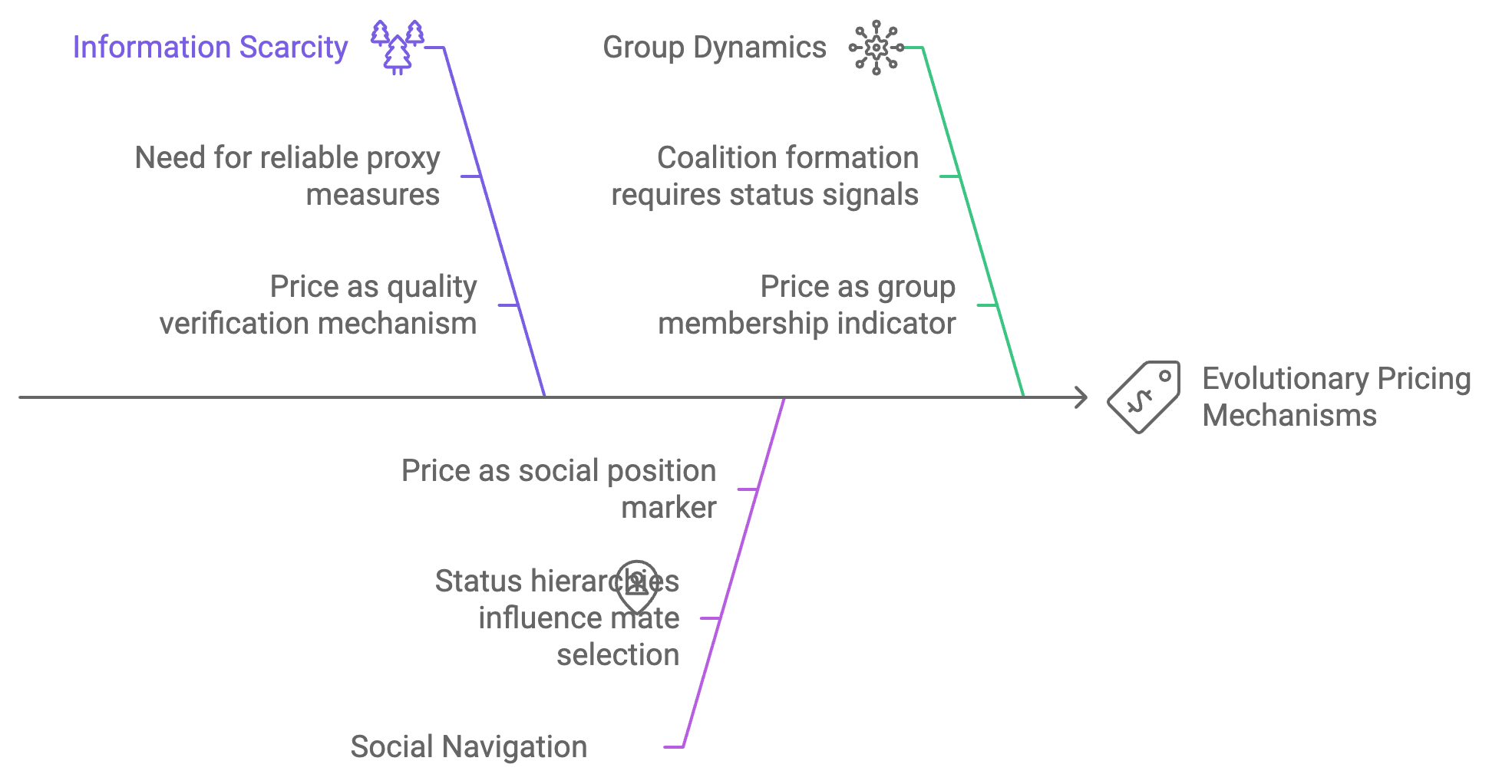
This system evolved through three key pressures:
- Information Scarcity: Limited ability to directly assess quality, need for reliable proxy measures, and price as a quality verification mechanism.
- Social Navigation: Status hierarchies influence mate selection, resource allocation signals genetic fitness, and price as a social position marker.
- Group Dynamics: Coalition formation requires status signals, resource sharing indicates alliance potential, price as group membership indicator.
The Luxury Paradox
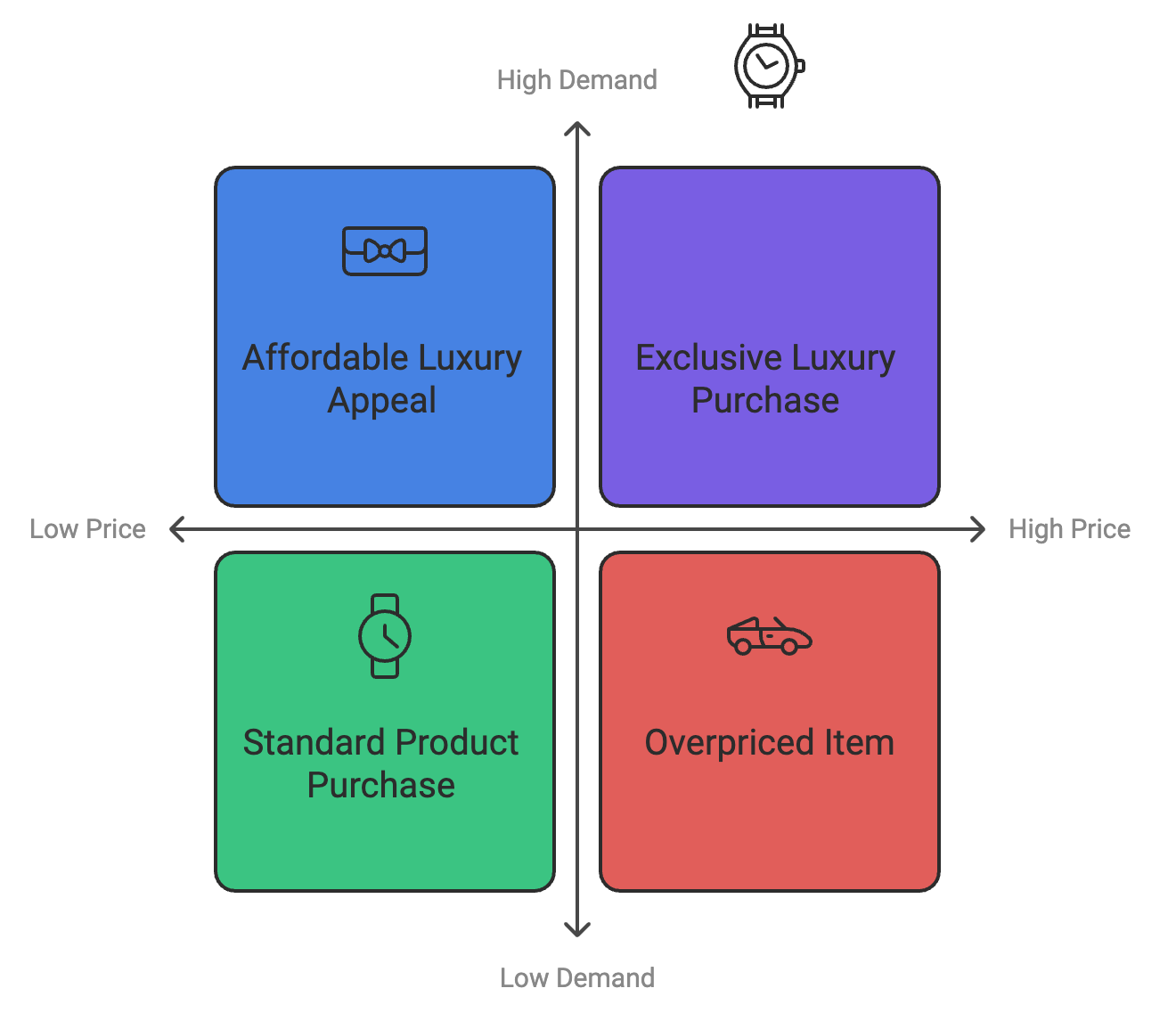
This evolutionary framework explains a Luxury Category Paradox - why certain brands can systematically violate traditional price-demand relationships:
Signal Amplification
- Traditional Model: Price ↑ → Demand ↓
- Luxury Model: Price ↑ → Exclusivity ↑ → Demand ↑
Value Construction
- Standard Products: Value = Utility/Price
- Luxury Items: Value = Price × Social Signal × Identity Confirmation
Neural Integration
- Regular Purchases: Price processed in logical brain regions
- Luxury Buying: Price activates social and emotional circuits
Practical Implementation
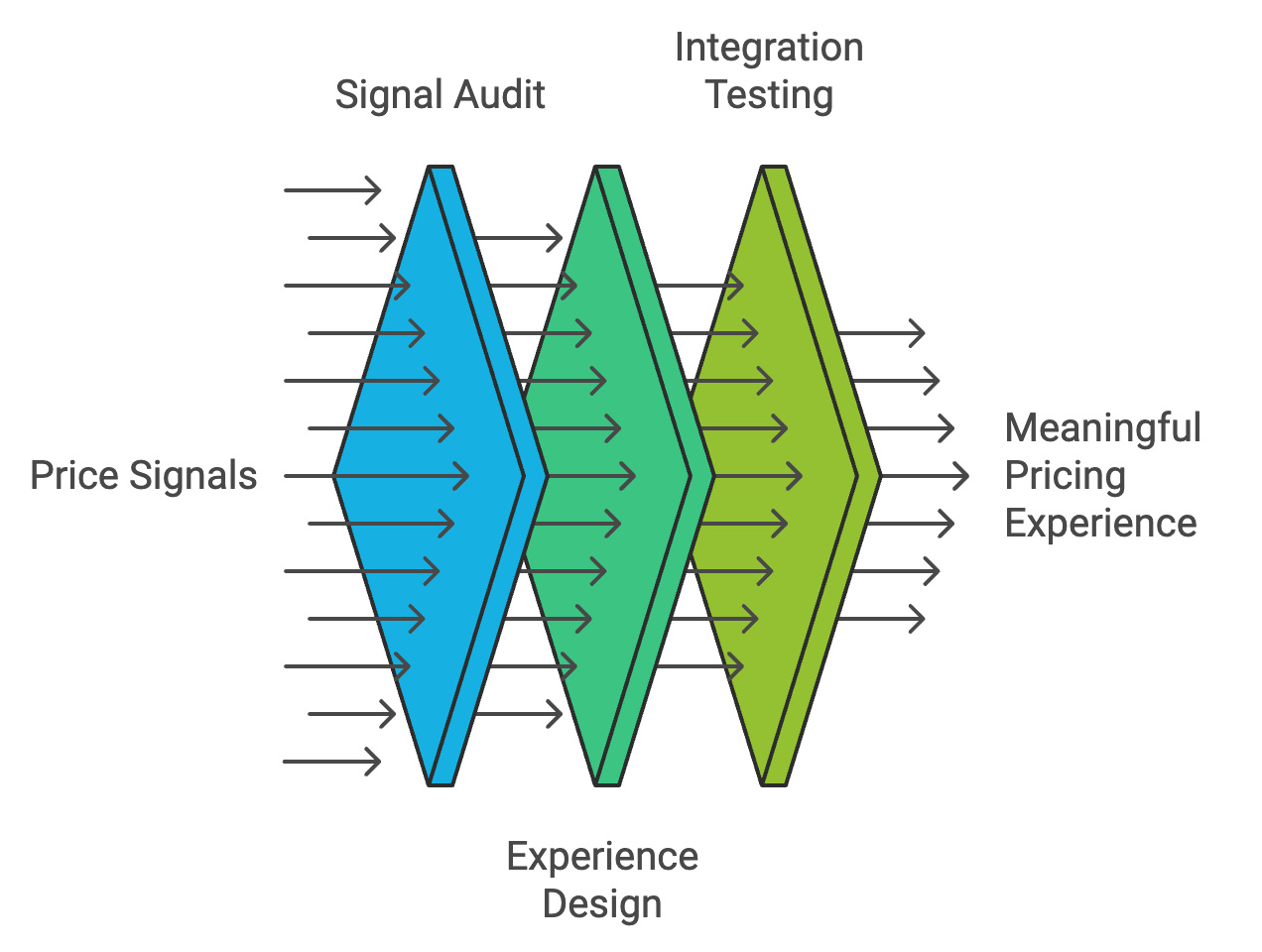
For businesses seeking to apply these insights, consider the Price Integration Protocol:
- Signal Audit: Map current price signals, identify reference frames, and analyze social context.
- Experience Design: Create coherent price narratives, engineer expectation patterns, and build value-supporting rituals.
- Integration Testing: Measure signal alignment, monitor experience construction, track memory formation.
As we move to our next section on The Measurement Fallacy, remember: Price isn't just a number - it's a sophisticated input into the brain's experience construction system. The most successful businesses don't just set prices; they architect the neural frameworks through which prices create meaning.
The Measurement Fallacy: Quantum Mechanics of Customer Experience
What if we tried to measure the temperature of water by placing it in a freezer? The very act of measurement fundamentally alters what you're trying to measure. This principle, familiar to quantum physicists, reveals a profound truth about business metrics: The act of measuring customer experience fundamentally transforms that very experience.
The Observer Effect in Business: The phenomenon whereby the tools and methods we use to measure customer experience become integral components of that experience, fundamentally altering what we're attempting to measure.
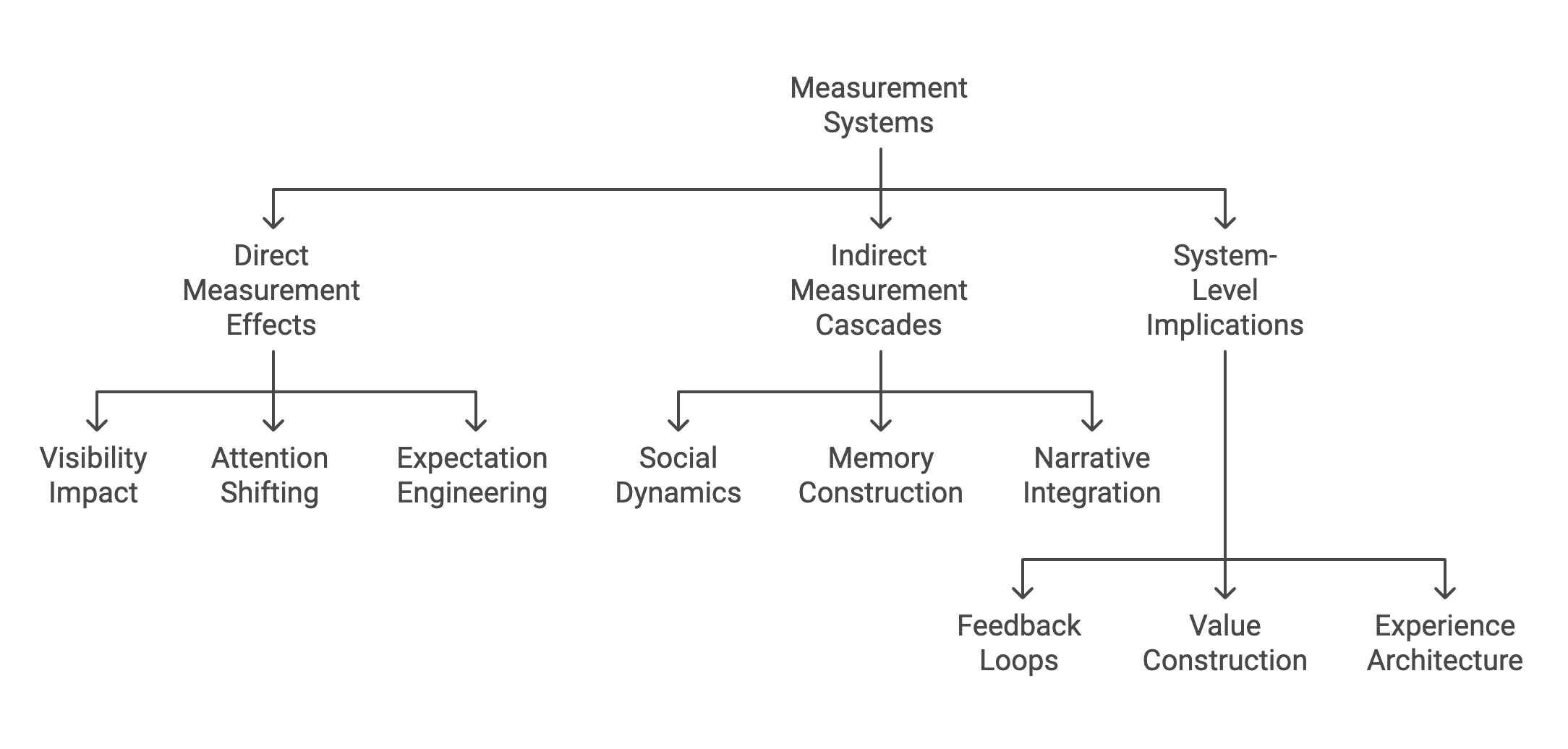
The Architecture of Measurement
Consider the Measurement-Experience Matrix - a framework for understanding how measurement systems interact with human perception:
Direct Measurement Effects
- Visibility Impact: Making measurements visible changes behavior
- Attention Shifting: Measurement focus alters experience priority
- Expectation Engineering: Metrics shape anticipation patterns
Indirect Measurement Cascades
- Social Dynamics: Metrics influence group behavior
- Memory Construction: Measurement affects experience recall
- Narrative Integration: Numbers become part of the story
System-Level Implications
- Feedback Loops: Measurements create behavior patterns
- Value Construction: Metrics shape value perception
- Experience Architecture: Measurement systems design experiences
The London Underground Revolution
Let's introduce the Temporal Inconsistency Matrix of Efficiency (TIME) here, perfectly illustrated by London Underground's revolutionary discovery: Installing countdown clocks showing train arrival times improved customer satisfaction more than actually increasing train frequency. This wasn't just about information - it was about fundamentally restructuring the experience of waiting.
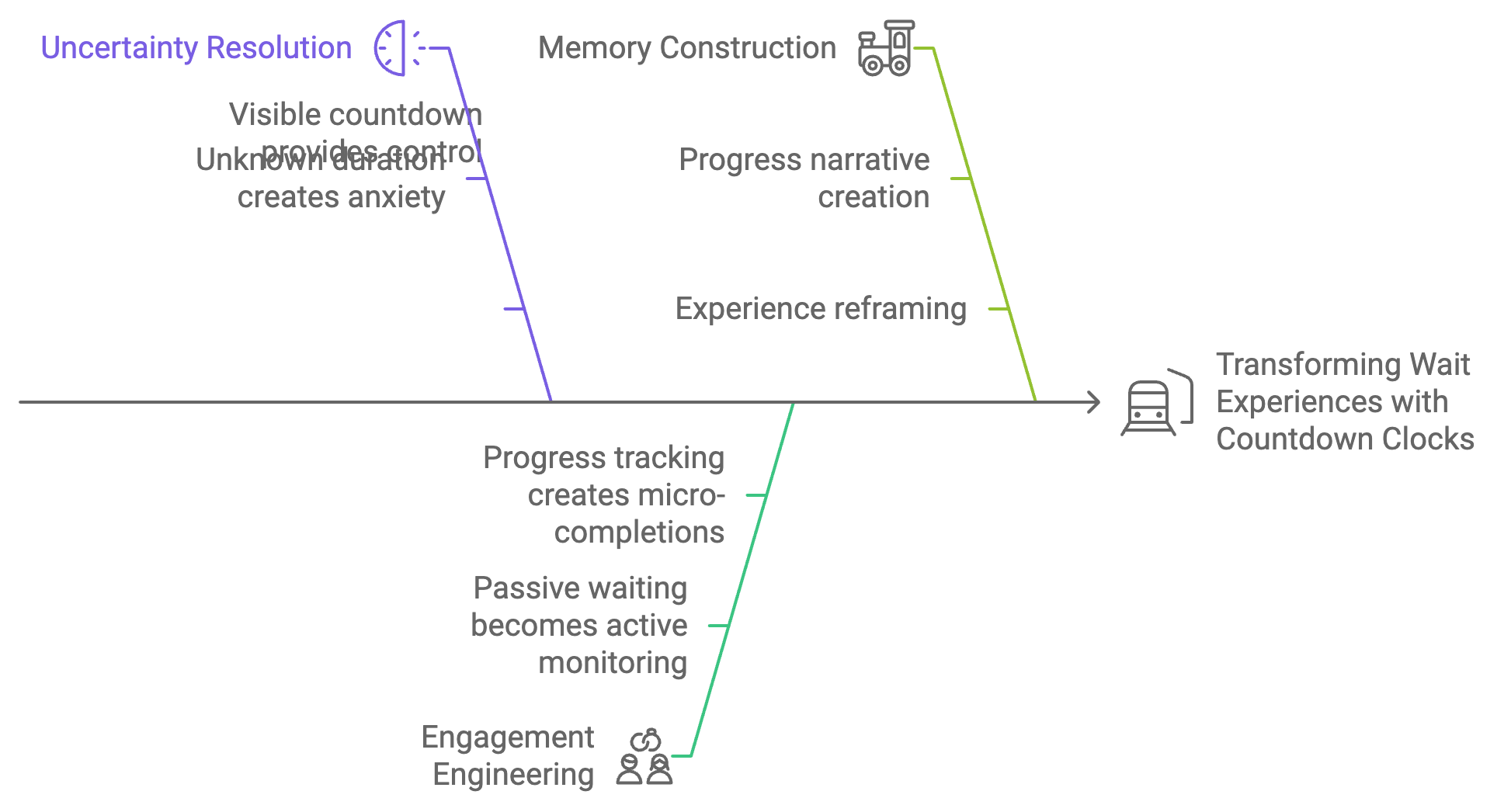
This transformation operates through three key mechanisms:
- Uncertainty Resolution: Unknown duration creates anxiety, visible countdown provides control, and measurement becomes experience.
- Engagement Engineering: Passive waiting becomes active monitoring, progress tracking creates micro-completions, and time perception fundamentally shifts.
- Memory Construction: Peak-end rule optimization, progress narrative creation, experience reframing.
The Uber Transformation
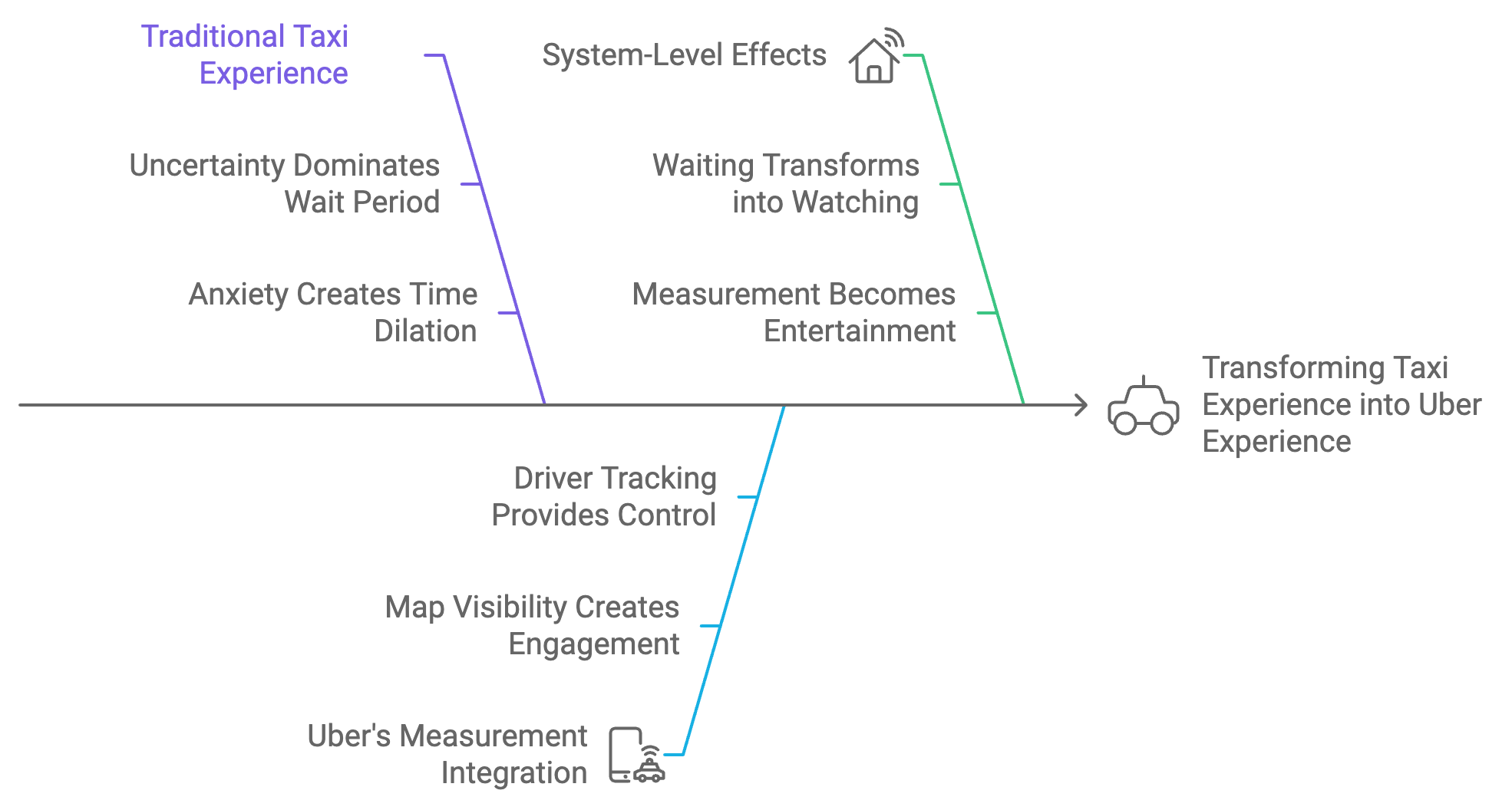
The Uber revolution wasn't primarily about technology - it was about transforming measurement into experience. Consider the psychological architecture:
- Traditional Taxi Experience: Uncertainty dominates wait period, anxiety creates time dilation, and experience feels uncontrolled.
- Uber's Measurement Integration: Map visibility creates engagement, driver tracking provides control, and wait becomes interactive experience.
- System-Level Effects: Waiting transforms into watching, uncertainty converts to anticipation, measurement becomes entertainment.
The Disney Queue Insight
Disney's sophisticated queue management system reveals an Expectation-Reality Paradox:
Expectation-Reality Paradox: The phenomenon where managing expectations through deliberate measurement manipulation can create better experiences than actual service improvements.
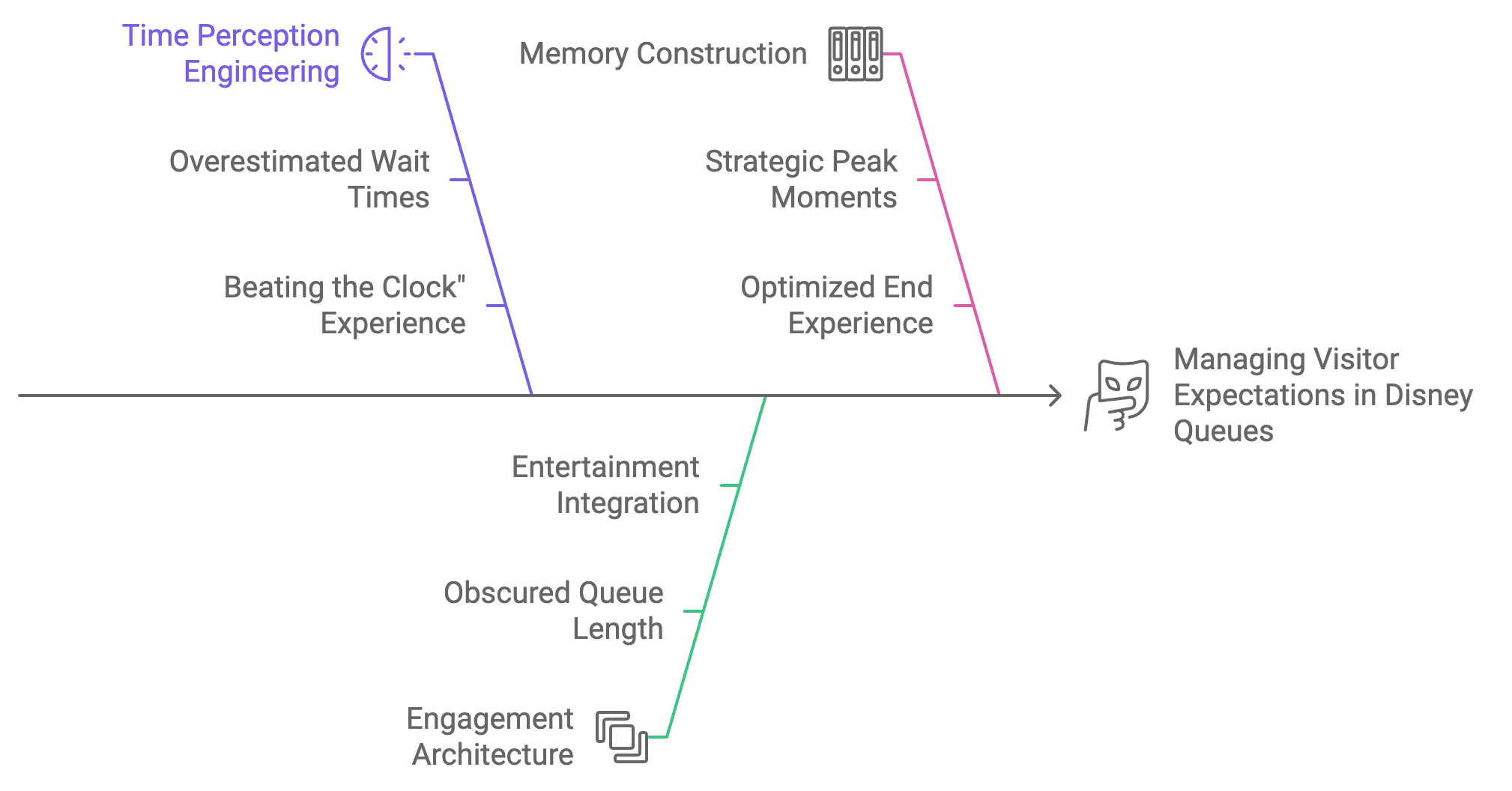
This operates through three sophisticated mechanisms:
- Time Perception Engineering: Posted times typically overestimate by 20%, creates consistent "beating the clock" experience, transforms waiting into winning.
- Engagement Architecture: Queue design obscures total length, progress markers create micro-achievements, and entertainment integration shifts focus.
- Memory Construction: Peak moments strategically placed, end experience optimized, and story narrative created.
The Measurement Integration Principle
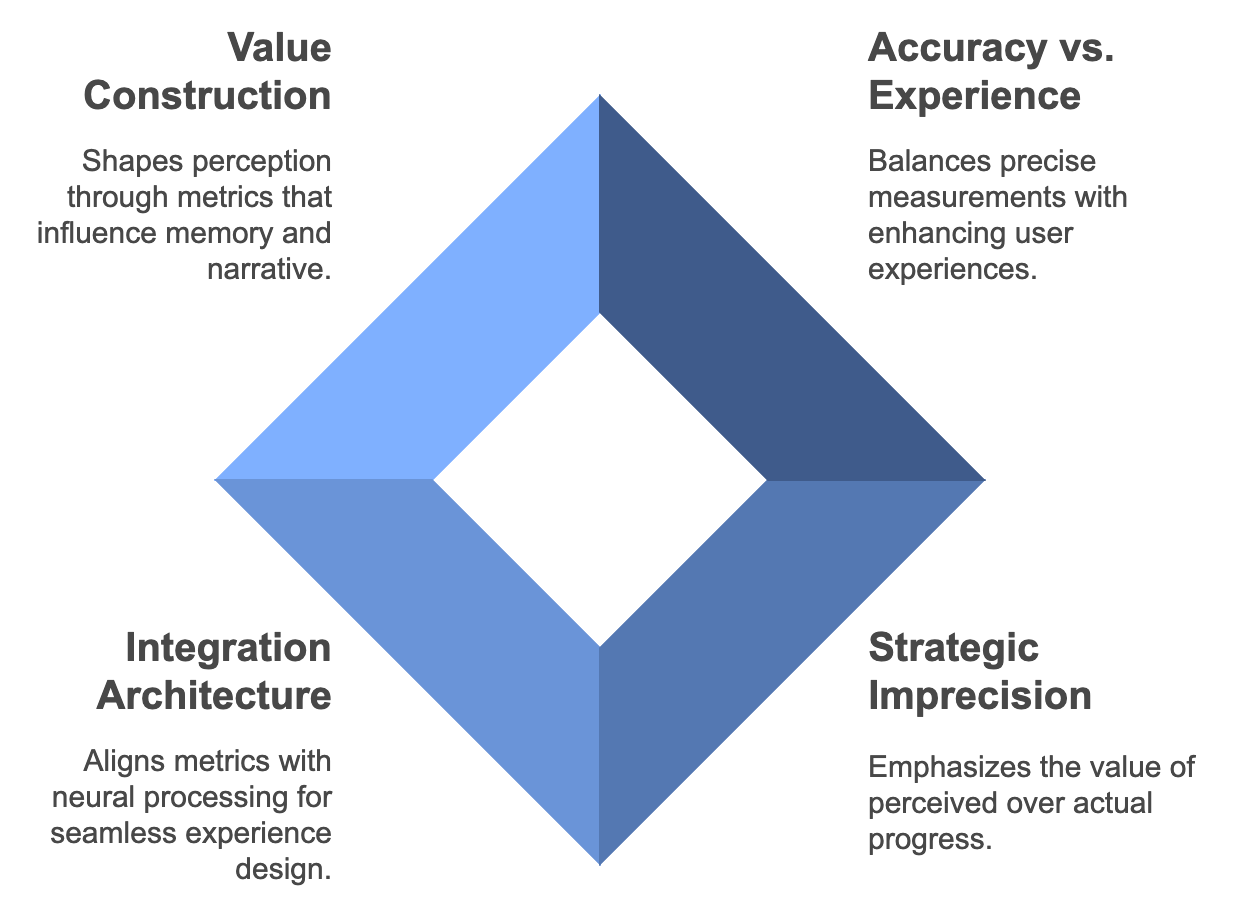
Measurement Integration Principle: "The most valuable measurements aren't those that most accurately reflect reality, but those that most effectively construct positive experiences."
This principle operates through three key insights:
Accuracy vs. Experience
- Perfect measurement can destroy value
- Perceived progress often matters more than actual progress
- Strategic imprecision can enhance experience
Integration Architecture
- Measurements should become part of experience design
- Metrics need to align with neural processing
- System thinking must replace linear measurement
Value Construction
- Measurements shape value perception
- Metrics influence memory formation
- Numbers become part of narrative
Practical Implementation Framework
For businesses seeking to apply these insights, consider the Measurement Design Protocol:
As we move to our final section on Experience Design, remember: The goal isn't to measure experiences more accurately, but to design measurement systems that actually enhance the experiences they measure. The most sophisticated businesses don't just collect metrics - they architect how those metrics transform reality.
The Future of Experience Design: Architecting Neural Reality
Imagine for a moment that you could design not just products or services, but the very mechanisms through which human beings construct their experience of reality. This isn't science fiction - it's the frontier of Neurometric Business Design: the systematic creation of business systems that align with the brain's natural architecture for constructing meaning and value.
Neurometric Business Design: A sophisticated methodology for creating business solutions that work with, rather than against, the fundamental patterns of human consciousness while maintaining measurable performance metrics.
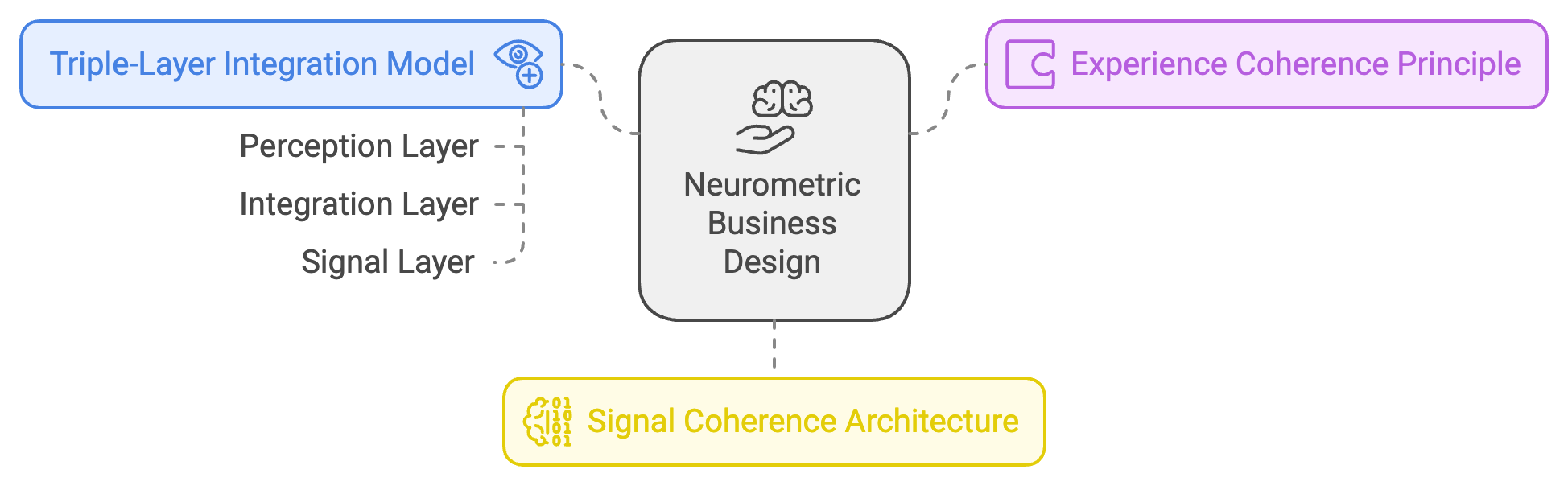
The Architecture of Experience Design: Triple-Layer Integration Model
The Perception Layer:
- Engineering Reality Construction: Instead of asking "What service are we providing?", we must first understand: Consider British Airways' lounge redesign project. Traditional thinking focused on amenities - better chairs, faster WiFi, fancier snacks. But neurometric analysis revealed something fascinating: The primary driver of satisfaction wasn't service quality but certainty about service access.
- How do customers construct their experience?
- Which contextual factors shape perception?
- Where does uncertainty create anxiety?
- Tell a consistent story
- Align with expectations
- Create meaningful patterns
- Support value narrative
The Integration Layer:
- Creating Experience Coherence: This is where most businesses fail - they optimize individual touchpoints without understanding the following principle.
The Experience Coherence Principle:
"The quality of an experience is determined not by the average of its parts, but by the coherence of its narrative."
The Signal Layer:
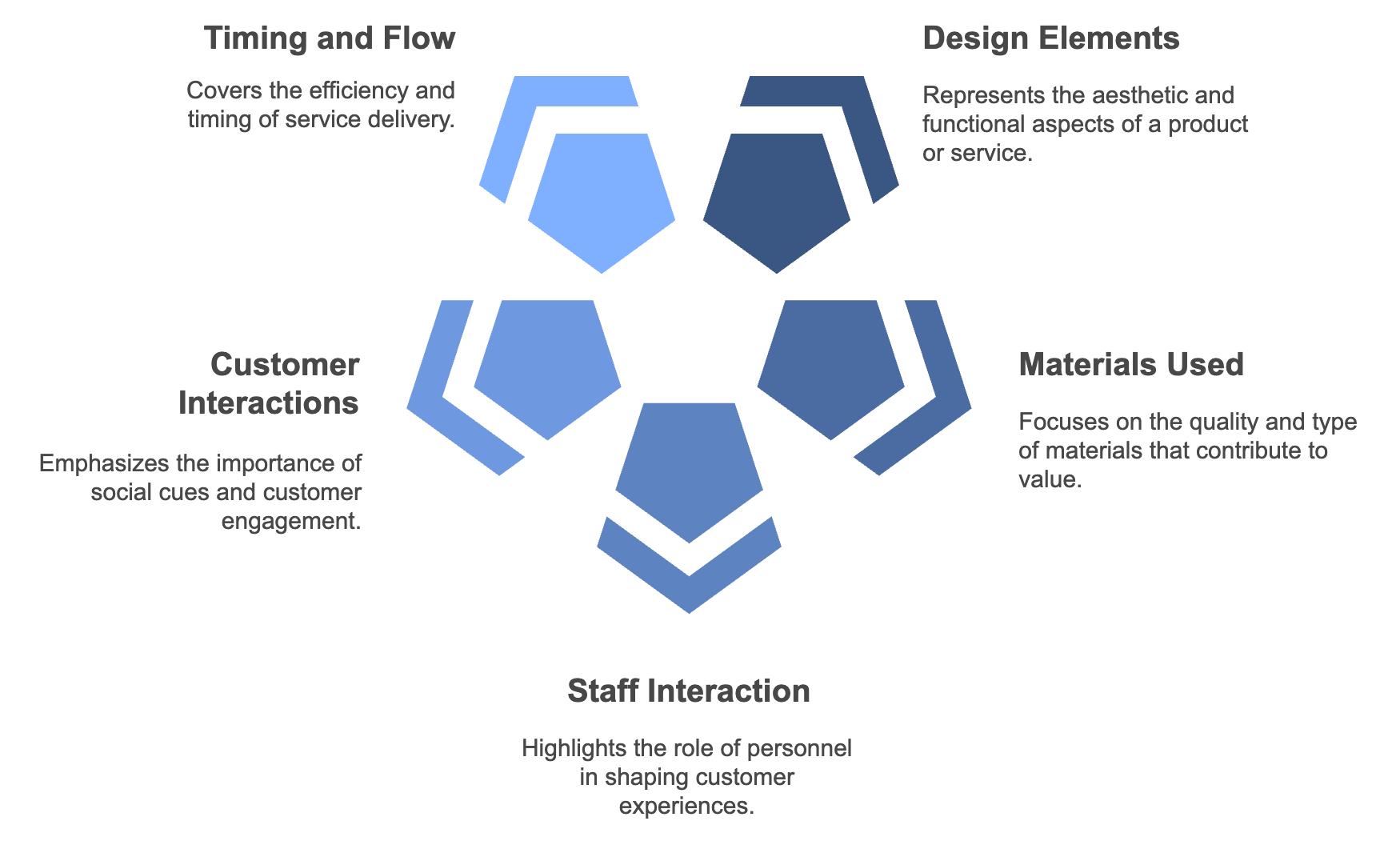
- Orchestrating Value Perception: This layer focuses on something I refer to as Signal Coherence Architecture
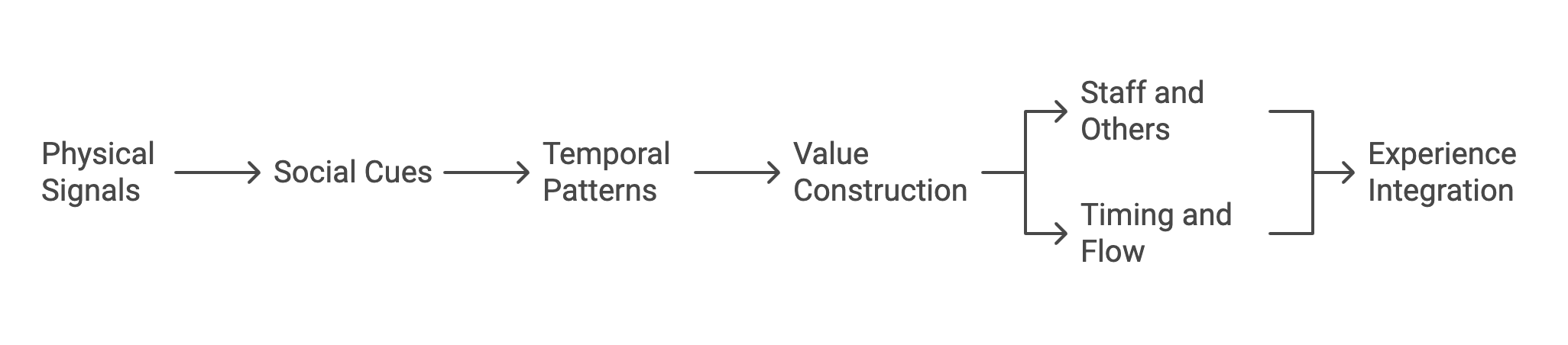
The Disney Paradigm: Masters of Neural Architecture
Consider how Disney constructs the theme park experience:
- Perception Engineering: Forced perspective makes buildings appear larger, hidden infrastructure maintains narrative coherence, and strategic sight lines control attention flow.
- Signal Integration: Staff are "cast members" in a larger story, every surface detail supports the narrative, even maintenance becomes part of the show
- Experience Coherence: Queue design tells sequential stories, peak moments strategically placed, exit paths optimize final impressions.
The Implementation Framework
For businesses seeking to apply these insights, a Neural Experience Protocol helps facilitate this:
- Reality Construction Audit: Map current experience pathways, identify coherence breaks, analyze value construction patterns.
- Signal Integration Design: Create unified signal architecture, engineer temporal flow patterns, build consistent value narratives.
- Experience Testing Framework: Monitor coherence metrics, track value construction, and measure narrative consistency.
The Apple Example: Masters of Neural Integration
Consider how Apple orchestrates every aspect of their customer experience:
Store Design
- Physical Architecture: Matches product design language
- Social Choreography: Staff movement patterns
- Experience Flow: Product interaction sequence
Product Integration
- Unboxing Ritual: Carefully engineered revelation
- Setup Experience: Guided discovery process
- Ecosystem Entry: Staged involvement increase
Service Architecture
- Genius Bar: Expertise theater
- Training Sessions: Community building
- Support Structure: Multi-layer engagement
Beyond Traditional Experience Design
The future of business lies not in optimizing individual metrics but in a Neural Reality Engineering - the systematic alignment of business systems with the brain's natural architecture for constructing meaning and value.
This requires three fundamental shifts:
From Features to Frameworks
- Past: List of product attributes
- Present: Service design thinking
- Future: Reality construction systems
From Metrics to Meaning
- Past: Numerical optimization
- Present: Experience measurement
- Future: Value construction design
From Services to Synthesis
- Past: Delivery optimization
- Present: Experience integration
- Future: Neural alignment
The Path Forward
As we move into an AI-driven future, understanding these principles becomes not just advantageous but essential.
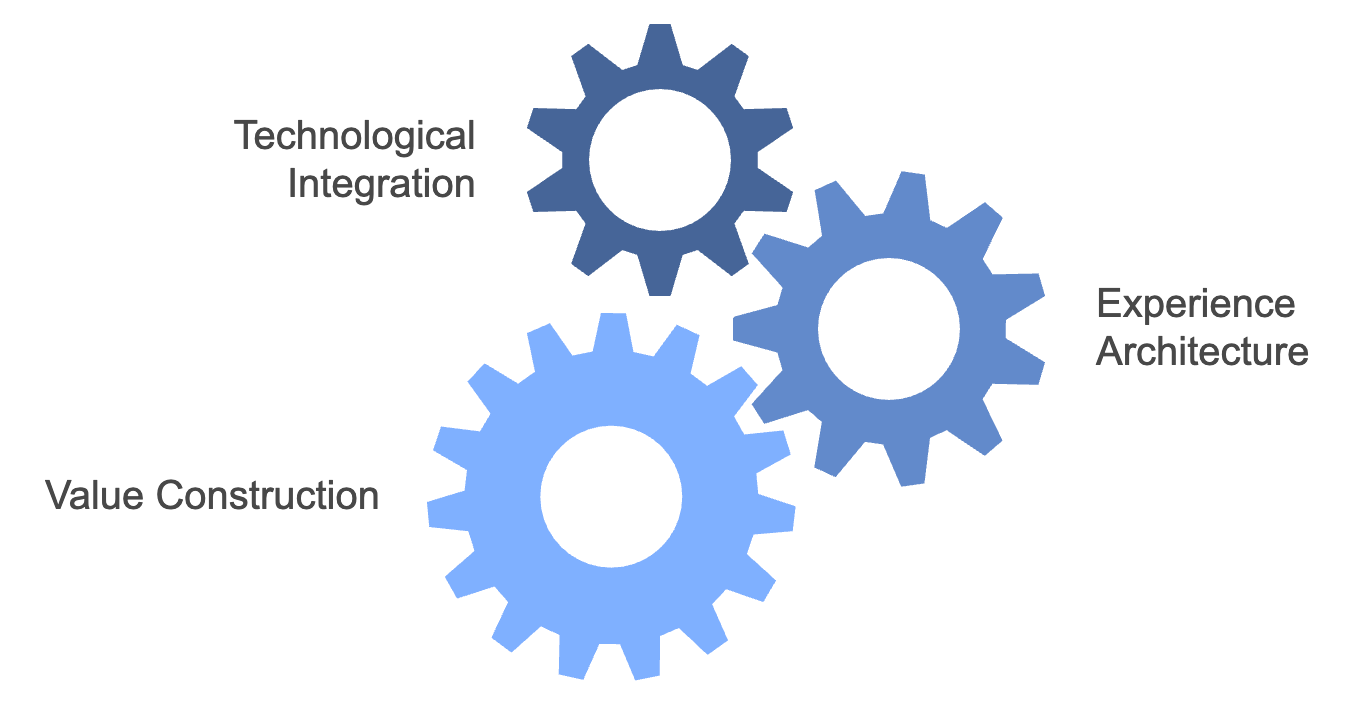
Consider what I term the Triple Transformation Framework:
- Technological Integration: AI systems that understand neural patterns, technology that enhances rather than replaces human experience, and systems designed for psychological coherence.
- Experience Architecture: Beyond user interface to neural interface, past service design to reality design, through optimization to orchestration.
- Value Construction: Systematic reality engineering, coherent narrative creation, neural pattern alignment.
The Ultimate Challenge
The businesses that thrive in the coming decades will be those that master not just the mechanics of service delivery but the architecture of human experience itself. This requires understanding that we're not just designing products, services, or even experiences - we're designing the very frameworks through which human beings construct their perception of reality.
As we conclude our exploration of the Science of Subjective Value, remember: The most powerful business innovations may not lie in changing objective reality but in understanding and aligning with the way human beings actually experience it. The future belongs not to those who can measure most precisely, but to those who can orchestrate most coherently with the fundamental patterns of human consciousness.
The Purple Paradox Revisited
Let us return to where our journey began - that mysterious purple sunset that doesn't exist in physical reality, yet burns vivid in our experience. Like those frustrated travelers at Paddington Station, staring at empty seats on earlier trains they can't board, we've discovered something profound about the gap between objective reality and human experience.
The Architecture of Understanding
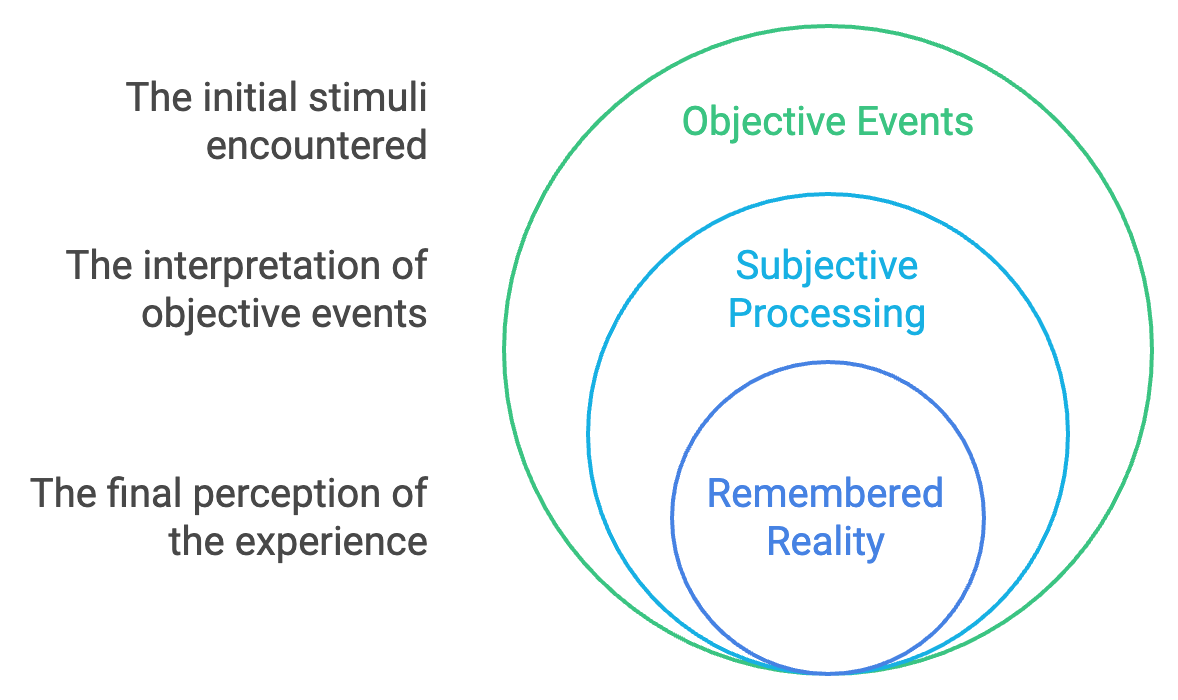
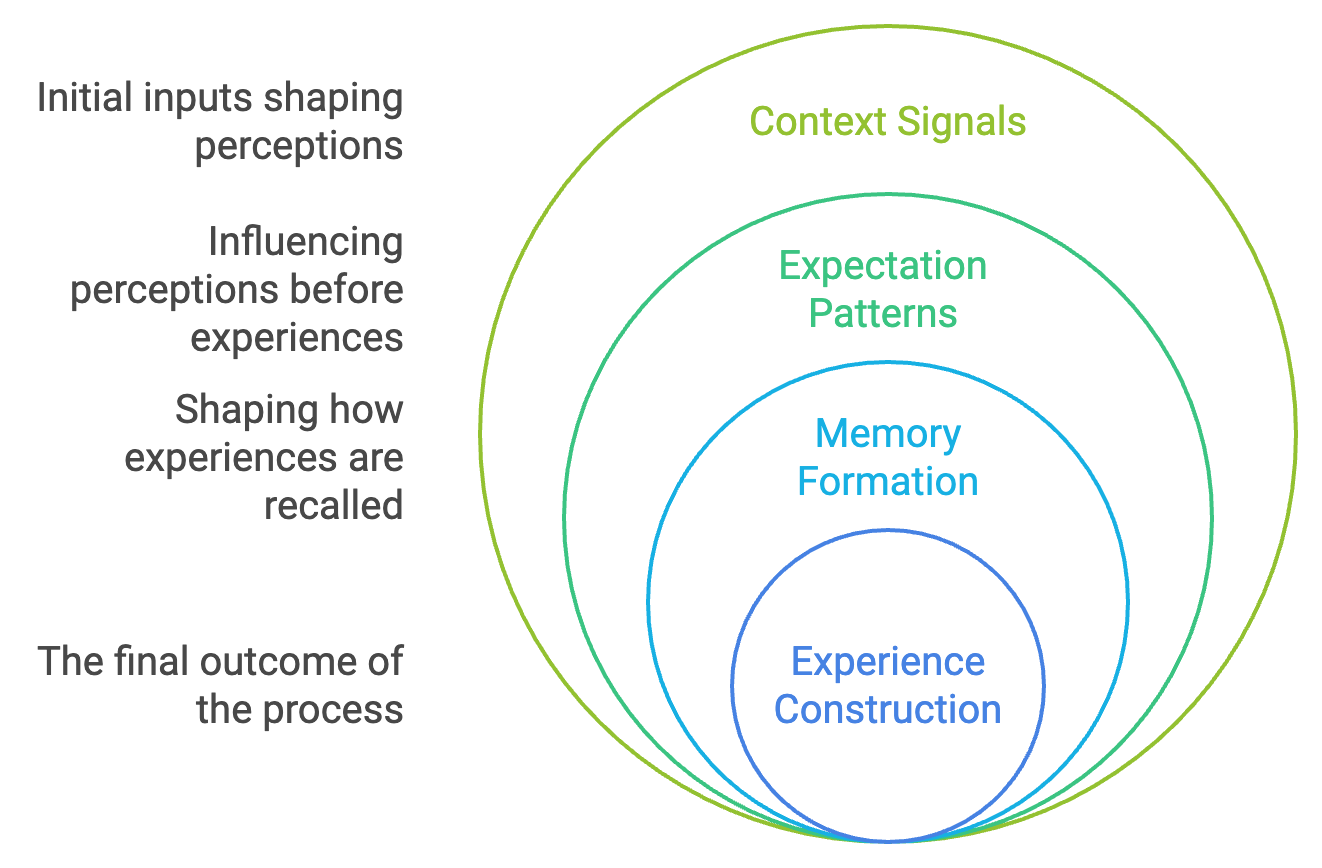
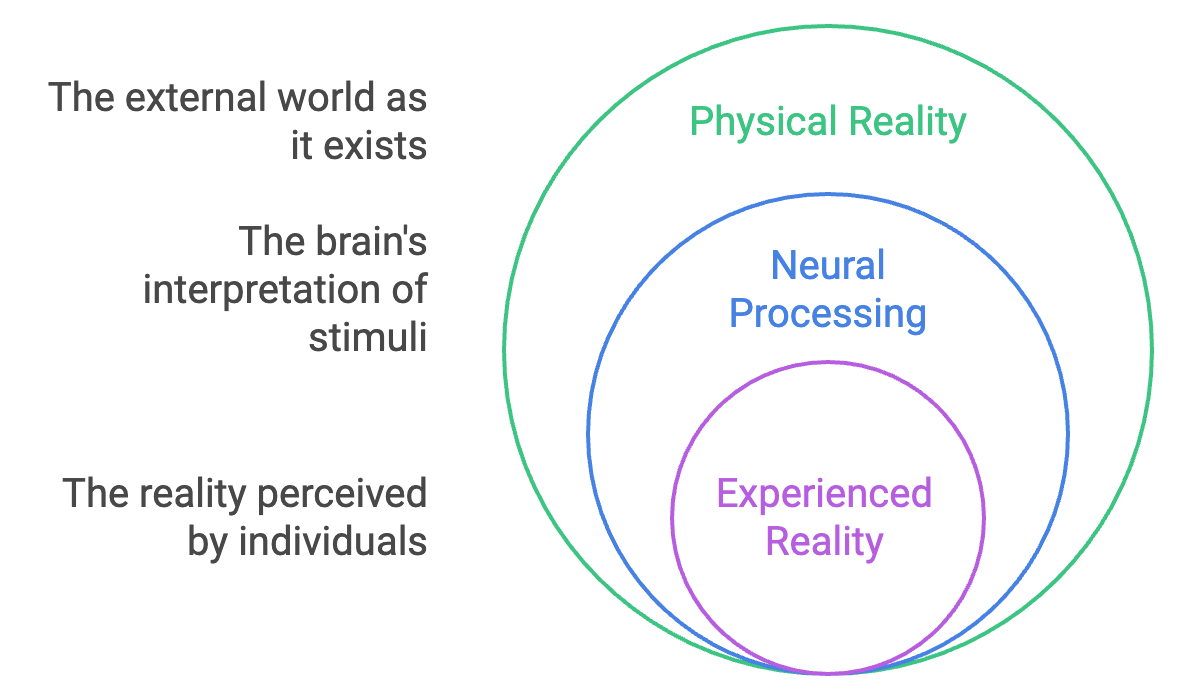
What we've uncovered isn't just a collection of business insights - it's a fundamental framework for understanding how human consciousness constructs reality itself. This is a Triple Reality Principle:
- The Experience Layer
- The Integration Layer
- The Construction Layer
The Fundamental Insight
This brings us to The Purple Paradox of Business:
"The most powerful business solutions often come not from changing objective reality, but from better aligning with how the human brain constructs subjective experience."
Consider these transformative examples:
The Transportation Revolution
- Traditional Solution: £60 billion high-speed rail project
- Neural Solution: £200,000 app enabling early boarding
- Same reduction in perceived journey time
The Retail Transformation
- Traditional Approach: More product features
- Neural Approach: Better experience architecture
- Apple's mastery of reality construction
The Service Evolution
- Standard Model: Faster service delivery
- Neural Model: Better uncertainty resolution
- Disney's queue management genius
The Future of Business
As we stand at the threshold of an AI-driven future, this understanding becomes more crucial than ever. Consider this Triple Transformation Framework:
- From Measurement to Meaning: Beyond simple metrics, through data analysis, and toward experience architecture.
- From Products to Perception: Past feature lists, through value creation, and toward reality construction.
- From Service to Synthesis: Beyond delivery, through integration, toward neural alignment.
The Final Paradox
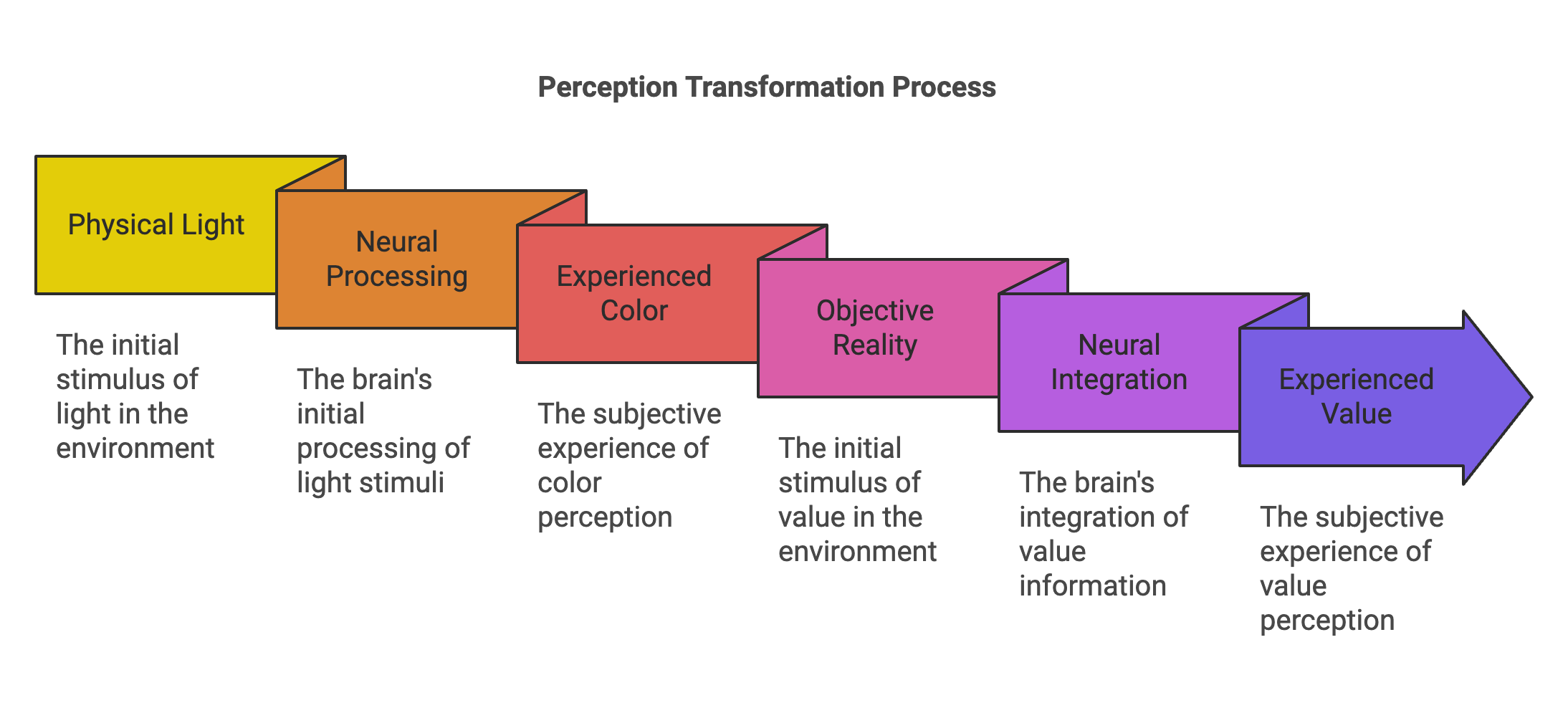
Perhaps the most profound implication is this: The gap between business metrics and human psychology isn't a flaw in the system - it's a fundamental feature of consciousness itself. Just as our brains create the experience of purple from the interaction of red and blue wavelengths, they construct value from the sophisticated integration of context, expectation, and sensory input.
Consider these parallels:
The Path Forward
The businesses that thrive in the coming decades will be those that master Neural Reality Engineering - the systematic alignment of business systems with the brain's natural architecture for constructing meaning and value.
- From Control to Coherence: Instead of trying to control every aspect of the customer experience, we should focus on creating harmony. This means understanding how experiences are built in the human mind and designing them in a way that fits naturally with our brain's processes. It's about telling a consistent and engaging story that people can connect with.
- From Metrics to Meaning: Rather than getting caught up in numerical data and optimization, we should aim to design experiences that truly matter to people. This involves focusing on creating value through thoughtful experience design, rather than just chasing numbers.
- From Features to Frameworks: We need to move beyond simply adding more features to products. Instead, we should focus on designing services and experiences that create the framework for customers to construct their perception of value and meaning. It's about building systems that allow for holistic experiences rather than just offering more options
The Ultimate Question
The next time you see a purple sunset, remember this: The most fascinating aspects of human experience often lie not in the objective world, but in the magnificent way our brains construct reality itself. And in that gap between the physical and the perceived, we find not just the future of business, but perhaps the key to understanding human consciousness itself.
As we watch those trains depart from Paddington Station, we might reflect on a final irony: The greatest opportunities for business innovation may not lie in changing objective reality but in understanding and aligning with the way human beings actually experience it.
The future belongs not to those who can measure most precisely, but to those who can align most coherently with the fundamental nature of human experience. The question is no longer whether to adapt to this new understanding, but how quickly we can transform our businesses to reflect it.
After all, like that impossible color purple, the most powerful business solutions might just lie in the beautiful gap between what is and what we experience. In that space between physics and perception, between metrics and meaning, we find not just better business strategies, but deeper insights into the very nature of human consciousness itself.
And isn't that absolutely fascinating?
Courtesy of your friendly neighborhood,
🌶️ Khayyam


Glossary of Key Terms and Concepts
Neural Value Architecture: The sophisticated system of mental processes through which humans construct their experience of value, integrating contextual cues, expectations, and sensory inputs into coherent perceptions.
Contextual Value Engineering: The systematic design of environmental and social cues that shape how the brain constructs experiential value through the orchestration of multiple perceptual and social signals.
Relative Value Gradient: The phenomenon where value perception shifts dramatically based on environmental reference points, independent of objective features or attributes.
Negative Context Cascade: A chain reaction where an initial contextual cue (like product naming) triggers a series of negative associations, ultimately impacting the overall value perception.
Context Engineering Protocol: A systematic approach to analyzing and designing contextual cues to support value construction in customer interactions.
Integrated Signal Matrix: A sophisticated system where multiple stimuli combine to construct a unified perception of value.
Signal Integration Theory: The systematic process through which the brain combines multiple contextual, social, and physical signals to construct a unified experience of value, operating through both conscious and unconscious pathways.
Posterior Value Enhancement Effect: The phenomenon where unexpected additional value (like extra fries) after a transaction is completed leads to an enhanced overall value perception.
Experiential Price Matrix: A framework explaining how price operates in human consciousness, integrating quality perception, experience construction, and social signaling.
Coherence Cascade: A self-reinforcing system where seemingly negative product attributes become powerful positive signals through strategic alignment with pricing and marketing.
Status-Price Integration Mechanism: The process by which higher prices can increase demand for certain products by activating social positioning circuits and aligning with desired self-image.
Adaptive Value Construction: The evolutionary development of neural systems that use price as a proxy for multiple survival-relevant variables, including resource quality, social status, and group affiliation.
Luxury Category Paradox: The phenomenon where certain brands can systematically violate traditional price-demand relationships due to the complex interplay of exclusivity, social signaling, and identity confirmation.
Price Integration Protocol: A systematic approach to aligning price signals with overall experience design and value narratives.
The Observer Effect in Business: The phenomenon whereby the tools and methods we use to measure customer experience become integral components of that experience, fundamentally altering what we're attempting to measure.
Measurement-Experience Matrix: A framework for understanding how measurement systems interact with human perception, including direct effects, indirect cascades, and system-level implications.
Temporal Uncertainty Resolution Principle: The concept that resolving uncertainty about wait times can improve customer satisfaction more than actually reducing wait times.
Expectation-Reality Paradox: The phenomenon where managing expectations through deliberate measurement manipulation can create better experiences than actual service improvements.
Measurement Integration Principle: The idea that the most valuable measurements aren't those that most accurately reflect reality, but those that most effectively construct positive experiences.
Neurometric Business Design: A sophisticated methodology for creating business solutions that work with, rather than against, the fundamental patterns of human consciousness while maintaining measurable performance metrics.
Triple-Layer Integration Model: A framework for experience design considering perception engineering, signal coherence, and experience integration.
Experience Coherence Principle: The concept that the quality of an experience is determined not by the average of its parts, but by the coherence of its narrative.
Neural Experience Protocol: A systematic approach to auditing reality construction, designing signal integration, and testing experience coherence in business contexts.
Neural Reality Engineering: The systematic alignment of business systems with the brain's natural architecture for constructing meaning and value.
Triple Reality Principle: A framework explaining how physical reality is processed through neural systems to create experienced reality, integrating context signals and expectation patterns.
The Purple Paradox of Business: The concept that the most powerful business solutions often come not from changing objective reality, but from better aligning with how the human brain constructs subjective experience.